
Generator problems
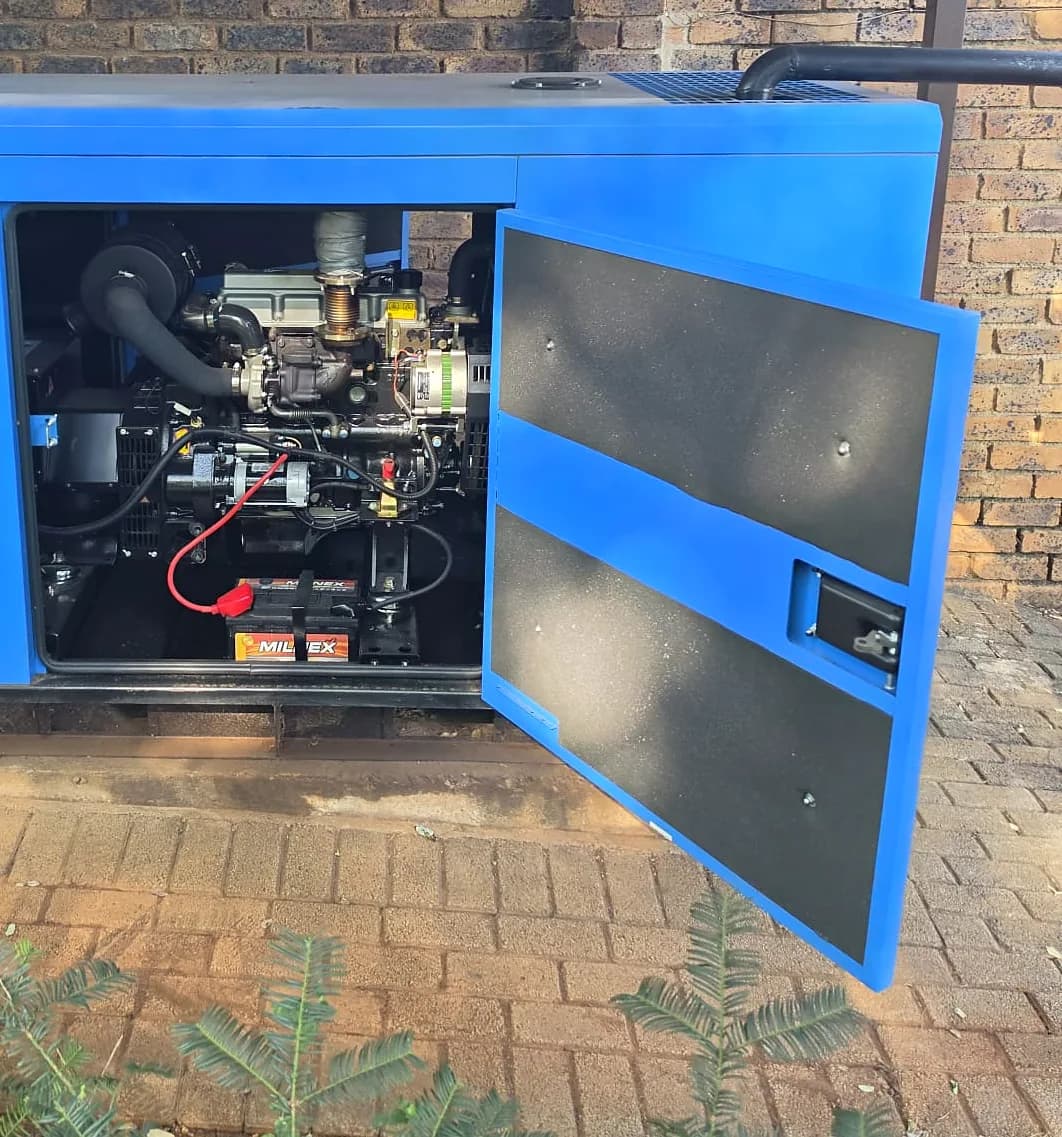
Why a Generator Battery Goes Flat or Will Not Charge
The short answer
A generator battery is charged in two ways: a mains-powered battery charger keeps it topped up while the set stands, and the engine’s belt-driven charge alternator charges it while the engine runs. A battery that goes flat between runs usually points to the charger or its supply; a charge fail alarm while the engine is running points to the charge alternator, its belt or its wiring. A battery at the end of its life, or one worn down by frequent load-shedding starts, fails either way.
- Flat after standing: suspect the charger or its supply
- Charge fail alarm while running: suspect the charge alternator or belt
- Put the controller in off before looking at the battery
- No flames, sparks or tools near the terminals
Need it fixed rather than diagnosed?
Free callouts and quotations. We arrive within 1–2 hours, usually within 1 hour.
Two charging systems, two different faults
| Compared | Battery charger | Charge alternator |
|---|---|---|
| Where it is | Battery chargerIn the control panel or on the canopy wall, fed from a mains supply | Charge alternatorOn the engine, driven by the fan belt |
| When it charges | Battery chargerWhile its mains supply is on, so normally while the generator is standing | Charge alternatorOnly while the engine is running |
| What stops it | Battery chargerA tripped supply breaker, a blown fuse, an unplugged lead, or a failed charger | Charge alternatorA broken or slipping belt, worn brushes, a failed regulator or diodes, or a broken excitation wire |
| How the fault shows | Battery chargerBattery flat after days or weeks standing; a low battery voltage alarm | Charge alternatorA charge fail alarm while running; the battery runs down over long outages |
| Found on | Battery chargerAutomatic standby sets | Charge alternatorElectric-start diesel engines; small petrol sets usually use a charging coil instead |
How does the battery problem show?
| Symptom | Likely causes | Repair route |
|---|---|---|
| Flat after the set has stood for a while | Likely causesCharger off, unplugged or failed, its fuse blown or its supply breaker tripped | Repair routeBattery charger repair |
| Charge fail alarm while the engine runs | Likely causesCharge alternator failed, belt broken or slipping, or a fault in the excitation wire | Repair routeCharge alternator repair |
| Slower to crank with each outage on a load-shedding day | Likely causesFrequent starts and short runs, with a weak charger or an ageing battery that never fully recovers | Repair routeBattery and charging test |
| Low battery voltage alarm, but the battery is new | Likely causesCharger not working, poor connections, a battery too small for the engine, or a drain on the battery | Repair routeGenerator repairs |
| Charges up, then fades within a day or two | Likely causesA sulphated or worn-out battery that has lost capacity, or a failed cell | Repair routeBattery replacement |
| Battery swollen, hot or smells of rotten eggs | Likely causesOvercharging from a faulty charger or regulator | Repair routeKeep away and call us |
| Slow cranking, then a click | Likely causesBattery too weak to crank the engine | Repair routeGenerator not starting |
Causes explained
Where the charge is being lost
The charger and its supply
The charger works quietly in the background, so a fault goes unnoticed until the battery is flat. A tripped supply breaker, a blown charger fuse or a plug knocked out during other work has the same effect as a dead charger. Chargers also fail from age, heat and surges, and some still show a light while delivering too little current.
The charge alternator
Driven by the fan belt, it charges the battery while the engine runs. Worn brushes, a failed regulator or diodes, a slipping belt, or a broken wire to its excitation terminal stop it charging. Many controllers raise a charge fail alarm when that happens.
Sulphation
A lead-acid battery left partly charged grows hard sulphate crystals on its plates. They cut its capacity for good, so a battery that has stood flat for weeks, or been undercharged for months, may never hold a full charge again.
Age and heat
Batteries wear out with time and charge cycles, and heat inside a canopy beside a hot engine speeds that up. An old battery can show good voltage at rest and still fail to crank the engine.
Connections and drains
Corroded terminals, loose clamps and damaged cables add resistance, so the battery charges slowly and cannot deliver cranking current. On sets without a charger, a controller or accessory left on can drain it between runs.
Overcharging
A faulty charger or regulator can overcharge the battery, boiling off electrolyte, overheating it and shortening its life. That is a safety problem as well as a reliability one.
Load shedding is hard on generator batteries
A standby battery used to start its engine a few times a month. During load shedding it may start it several times a day, and each start takes a large current. During the outage a mains-fed charger has no supply, so only the charge alternator puts charge back, and if the mains returns soon after the set has started, that short run restores little. The charger then has to make up the rest before the next outage. An ageing battery accepts charge slowly and holds less, and a weak charger cannot close the gap, so the battery falls a little further behind with each cycle. The first sign is often slow cranking on the last start of the day.
Long breaks between outages cause the opposite problem. When load shedding is suspended for months, the battery sits for weeks with only the charger looking after it. If the charger has failed, the battery drains and sulphates unnoticed, and the failure shows only at the next outage. Highveld winter mornings add to it, because a cold battery delivers less current to a cold, stiff engine.
That is why we load-test the battery and check the charger at every service, and why both are part of every maintenance plan. Portable generators with electric start usually have no charger, so a battery left for months between uses runs down and sulphates: run the set regularly, or have the battery checked before you need it.
What you can safely check
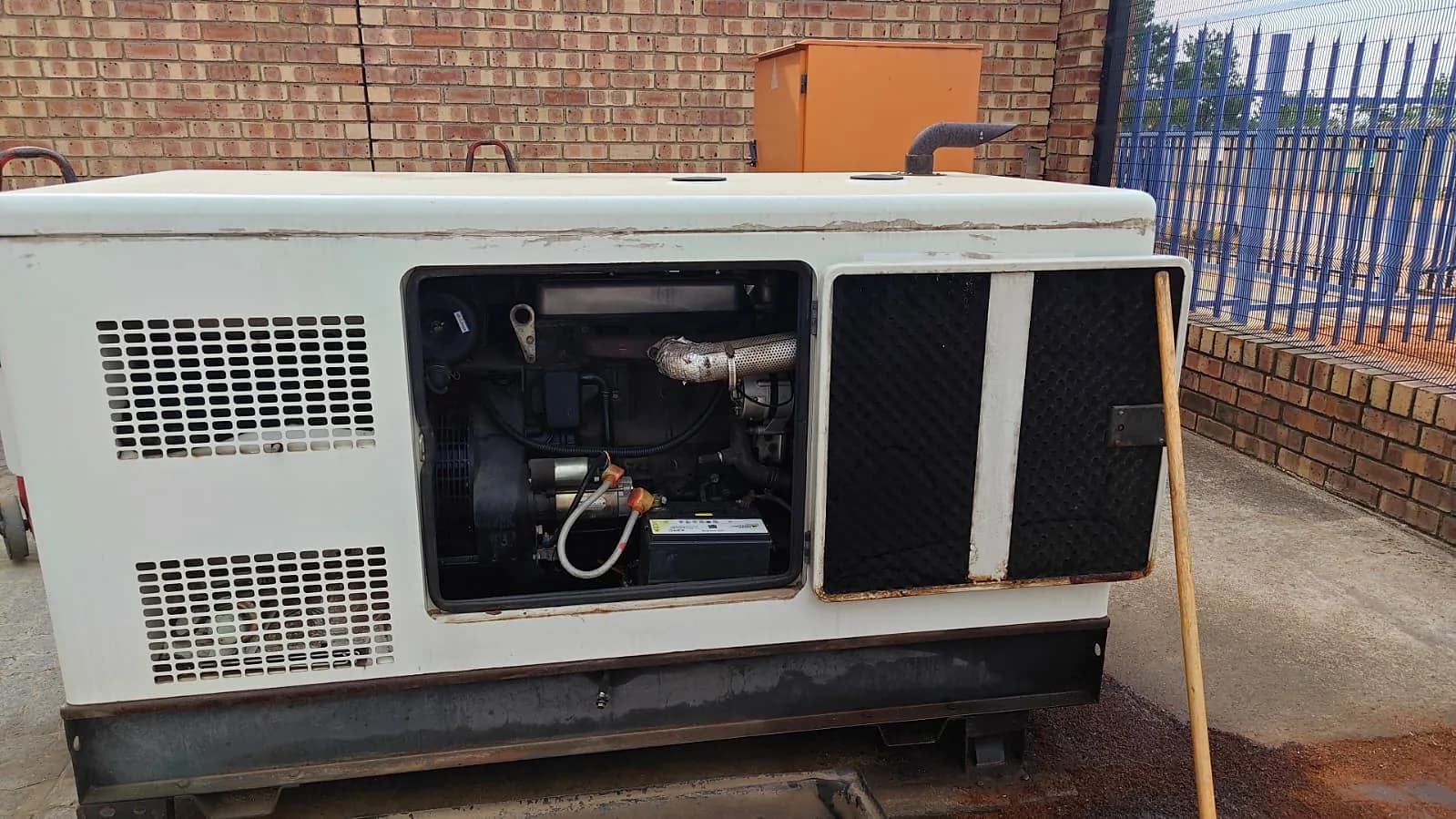
First put the controller in off or stop, so the engine cannot start on its own while you are close to it. Look only: do not touch the terminals or open the charger.
- The charger’s lights or display show it is powered and charging; note any fault light
- The charger’s plug is in and its supply breaker on the distribution board is on
- The controller’s battery voltage reading, if it shows one, and any battery or charge fail alarm
- The terminals for white or green corrosion and any clamp that looks loose, from a safe distance
- The battery case for swelling, cracks or leaking acid
- With the engine stopped, whether the fan belt is present and in one piece, if you can see it without removing a guard
- The battery’s age, from its date label or your service records
Tell us what you found, with the generator make and model and the battery’s age if you know it. Testing, charging, replacing and any wiring work is for a technician.
Diagnosis
How we find the cause
- 01
Test the battery under load
A load test shows whether the battery can still deliver cranking current, which a resting voltage reading cannot.
- 02
Check the charger
Voltage and current at the battery with the charger on, whether it switches correctly between boost and float, and whether its supply and fuse are sound.
- 03
Check the charge alternator
Charging voltage with the engine running, the belt’s condition and tension, and the excitation circuit from the controller.
- 04
Look for drains and resistance
Current drawn with everything off, and voltage drop across terminals and cables during cranking.
Typical repairs
| Cause found | Usual repair |
|---|---|
| Battery at the end of its life or sulphated | Usual repairReplace it with a battery of the correct voltage and cranking capacity |
| Charger failed | Usual repairRepair or replace the charger |
| Charger fuse blown or supply lost | Usual repairReplace the fuse or restore the supply, then find out why it failed |
| Charge alternator failed | Usual repairRepair or replace the alternator |
| Belt broken or slipping | Usual repairReplace and tension the belt |
| Corroded or loose connections | Usual repairClean, tighten and protect the terminals, or replace cables |
| Drain on the battery | Usual repairFind the circuit drawing current and correct it |
FAQ
Frequently asked questions
Is it the battery or the charger?
A load test tells. If the battery passes but is flat after standing, the charger is not doing its job. If the battery fails the test even after a full charge, it has lost capacity and needs replacing, but have the charger checked too, because a weak charger may be what wore it out.
Why does my generator battery go flat during load shedding?
During an outage a mains-fed charger has no supply, so the engine’s charge alternator must recharge the battery while the set runs. With several starts a day and some short runs, an ageing battery or a weak charge alternator cannot keep up. If the battery is still flat a day after the mains has returned, suspect the charger.
Is the charge fail alarm serious?
It means the battery is not being charged while the engine runs. The generator may keep running, but it may not restart next time. Have it checked before the next outage.
How long should a generator battery last?
It depends on the battery type, the temperature where it is installed and how well it is kept charged. A battery that is kept charged and tested regularly lasts much longer than one that is repeatedly run flat. We test the battery at each service, so it can be replaced before it fails.
Should I switch the battery charger off to save electricity?
No. Once the battery is full the charger draws very little, and switching it off lets the battery discharge slowly until the set fails to start in an outage. Leave it on and glance at its lights now and then.
Can I use a car battery in my generator?
Only if it matches the system voltage and has enough cranking capacity for the engine. The battery should be chosen for the engine, not for convenience; ask us if you are unsure.
Related pages
Related generator problems
Generator types
Related brands
Who we work for
Need a generator technician?
- 24/7 operations
- We Arrive Within 1–2 Hours (usually within 1 hour)
- Free callouts and quotations