
Generator servicing
Book a Generator Service Visit Anywhere in Gauteng
A generator service is one scheduled visit: a technician comes to your site anywhere in Gauteng, changes the oil and filters, checks the fuel, cooling, battery, alternator and controls, and finishes with a test run. It is due when the hour meter or the calendar says so, and during load shedding that can be weeks away rather than a year. If you would rather have every visit planned and tracked for you, that is generator maintenance.
- One visit: oil, filters, fluids, checks and a test run
- Due by running hours or by date, whichever comes first
- We Service & Repair All Generator Brands
- Free callouts and quotations; one-year warranty
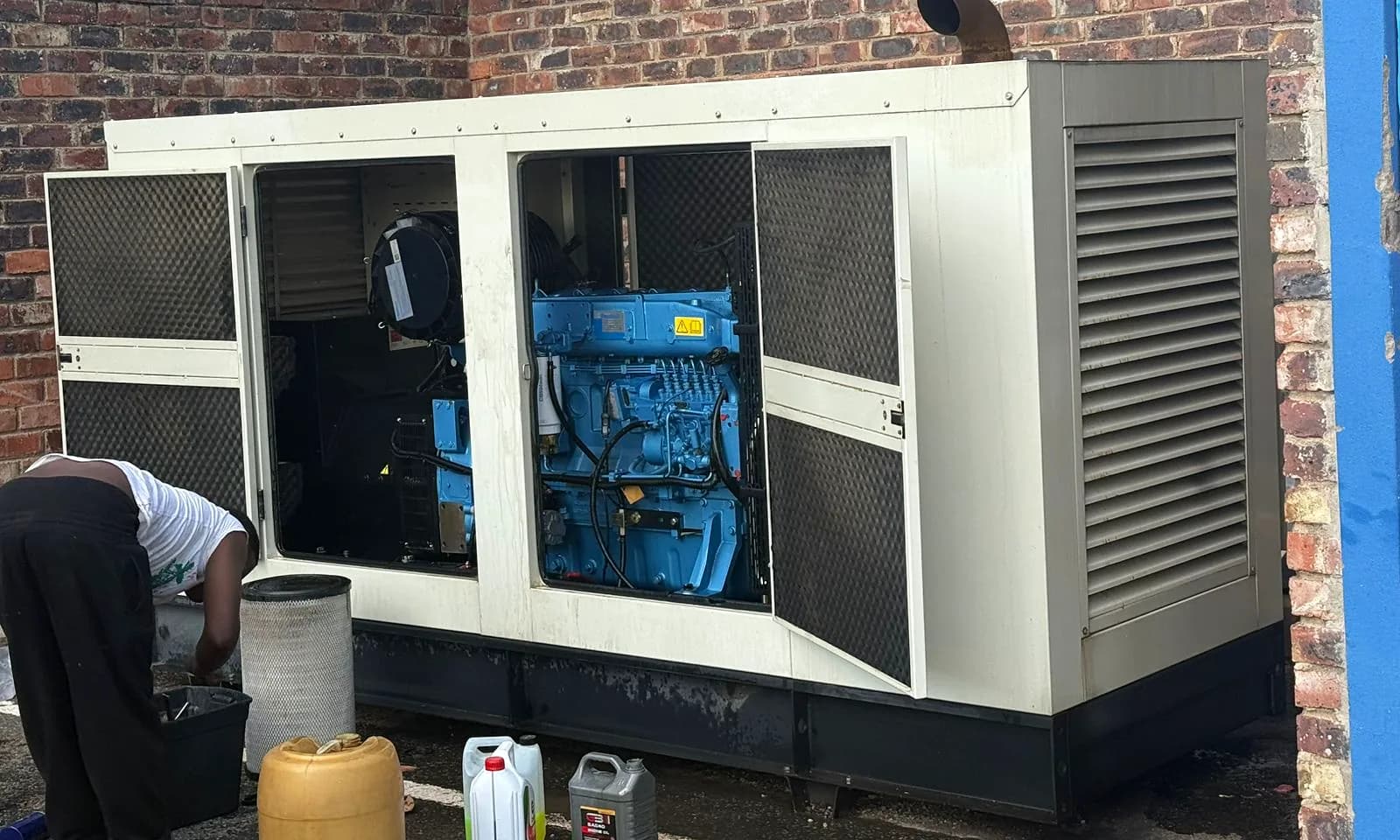
Established 2006
20 years of experience
24/7 operations
We Arrive Within 1–2 Hours
(usually within 1 hour)
Free callouts and quotations
One-year warranty
Qualified and certified technicians
We Service & Repair All Generator Brands
All generator makes and models
1 kVA–20,000 kVA capability
What a service includes on your type of generator
| Generator | Engine service | Also checked and tested |
|---|---|---|
| Portable petrol and inverter generators | Engine serviceOil changed (most have no oil filter), air filter cleaned or replaced, spark plug checked or replaced, and the fuel tap, sediment cup and carburettor bowl checked for stale petrol and water | Also checked and testedThe low-oil shutdown, recoil or electric start, sockets and output breaker, and the idle-control (eco) mode on inverter units, then a run on a plugged-in load |
| Small air- or water-cooled diesel standby sets, such as silent home and small-business units | Engine serviceOil and oil filter, fuel filter (and water separator where fitted), air filter, and valve clearances where the schedule calls for them. Cooling fins and the air path are cleared on air-cooled engines; coolant, radiator and fan belt are checked on water-cooled ones | Also checked and testedStarting battery and charger, glow plugs or intake heater where fitted, canopy vents and seals, the auto-start module and changeover where fitted, then a run with the house or shop on the generator |
| Larger water-cooled diesel standby and prime-power sets | Engine serviceOil and filters, primary and secondary fuel filters, water separator, air filter and restriction indicator, coolant strength and condition, belts and hoses, the jacket water heater where fitted, and the turbocharger and charge-air pipes | Also checked and testedAlternator terminal box and AVR, controller event log and settings, breakers, battery and charger, a transfer test through the changeover on standby sets, and a run under the building’s load |
| Gas (LPG or natural gas) home standby units, such as Generac | Engine serviceOil and oil filter, spark plugs, air filter, valve clearances where scheduled, and the engine’s cooling-air path cleared of leaves and nests | Also checked and testedBattery, controller settings and its scheduled exercise run, and the transfer switch. Any smell of gas or damage at the unit’s gas connection is reported to you; work on the gas supply, regulator and pipework is for a registered gas practitioner |
Every engine’s schedule is different, so we work from its manual and its hour meter rather than one fixed list. The generator service checklist goes through each system item by item.
Electrical and controls
More than oil and filters: the checks that prove it will start
Battery and charger: Battery not charging
Terminals cleaned and tightened, the battery tested at rest and while cranking, and the mains charger’s output measured. A charger that has quietly failed is one of the commonest reasons a set will not start when the power goes.
Alternator and AVR: AVR repairs
Terminal box connections checked for heat marks and looseness, cooling air paths cleared and bearings listened to. Output voltage is watched as the load changes, to show the AVR is holding it steady. A set that has stood in damp can have its winding insulation tested before it is loaded.
Controller: Control panel repairs
The alarm and event log read on DSE, ComAp, SmartGen and other modules that keep one, the service reminder reset, and settings such as the start delay and mains-sensing limits checked. Oil pressure and temperature readings are compared with what the engine is really doing, and the controller is left in automatic.
Changeover test: ATS and changeover problems
With your agreement we simulate a mains failure. The set should start, take the load through the ATS or changeover panel, hand back when the mains returns and then run unloaded to cool down before it stops. On most installations the supply drops for a few seconds at each transfer, so we agree the time first.
Test run under load: Load bank testing
Voltage, frequency, oil pressure and temperature are read while the generator carries the building’s own load wherever possible. If the site load is too light to prove the set, a load bank test is the way to check it at a meaningful output.
Fuel in the tank: Fuel system repairs
Water drained from the separator and, where the tank allows, the fuel checked for water, sludge and diesel bug. Contaminated diesel blocks filters and wears injectors, so we report it rather than fit new filters and walk away.
Timing
When is a generator due for a service?
Most engine manuals give two limits: a number of running hours and a length of time. The service is due at whichever comes first. The hour meter on the controller or panel counts running time, so it is the first thing to read when deciding whether to book. Many small portable units have no hour meter, and a note of how long it ran in each outage does the same job.
A standby set that runs only for tests and the odd outage can go years without reaching its hours limit, so the calendar decides. Oil oxidises, coolant inhibitors weaken and batteries age while the engine stands. A set that runs every day, on a farm, a building site or as prime power, reaches the hours limit long before the date comes round.
Dust, heavy loads, poor fuel and long runs at light load all argue for servicing sooner. We set the timing from the manual and from how your generator is really used, and note the hours at every visit so the next one can be predicted.
- Due at the hours limit or the time limit, whichever is first
- Seldom-used standby sets: the calendar decides
- Daily running: the hour meter decides
- Hard conditions bring the service forward

Load shedding
How load shedding brings the next service forward
Whenever load shedding is in force, a standby generator becomes a daily worker. At the higher stages a home or business can lose power several times a day, for two hours or more each time, and the generator covers every slot. A set that runs five hours a day adds about 35 hours a week, roughly 150 hours a month, so a generator that used to be serviced once a year by the calendar can reach its hours limit within weeks or a few months, depending on the interval in its manual.
Long municipal outages after storms, cable theft or substation faults have the same effect, without a published schedule to warn you. The answer is to watch the hour meter, not only the date: read it every week or so while outages are frequent, and book a service as it nears the limit rather than after an alarm.
Outage duty also changes what the service looks for. The starting battery and starter motor work at every start, changeover panels switch over and back with every slot, diesel gets topped up from containers, and a large diesel set carrying a few lights and a fridge for hours is prone to wet stacking. When the hour meter shows heavy outage use, we look at those points closely.
Keep a simple log between services
A few minutes a week makes the next service easier to time and quicker on the day. Keep to what is safe for an owner: readings, alarms, what you can see from outside the set, and the oil level with the set made safe. Electrical, fuel-system, gas and changeover work is for a technician.
- The hour-meter reading and the date, especially through weeks of load shedding
- Any alarm or warning on the controller screen; a photo is ideal
- When fuel was added, how much, and where it came from
- The oil level, checked with the engine cold and the controller switched off so the set cannot start
- Anything new: a slow start, smoke, a smell of fuel, a drip under the set or a noise it did not make before
Send the log with your booking. It shows whether the service is due by hours or by date, and what to look at first. Oil level, grade and pressure are explained further in service intervals and oil care.
On the day
How a service visit runs
- 01
Book and share the details
Send the make, model and kVA from the rating plate, the engine make if you know it, the hour-meter reading and the date of the last service. That tells us which oil and filters to bring and how long to allow.
- 02
Pick a time outside your outage slots
The generator is out of action while it is serviced, so we book around your load-shedding schedule and agree when a changeover test may interrupt supply.
- 03
Service and inspect
The service items for your class of generator, then an inspection of the electrical side, the fuel and the installation around the set.
- 04
Test run
A start and run with readings taken, under load where the site allows, and a changeover test on automatic sets. The controller is left in automatic, ready for the next outage.
- 05
Summary and quotation
You receive a summary of what was done and what we found. Anything that needs a repair is explained with a free quotation, and nothing is repaired until you agree.
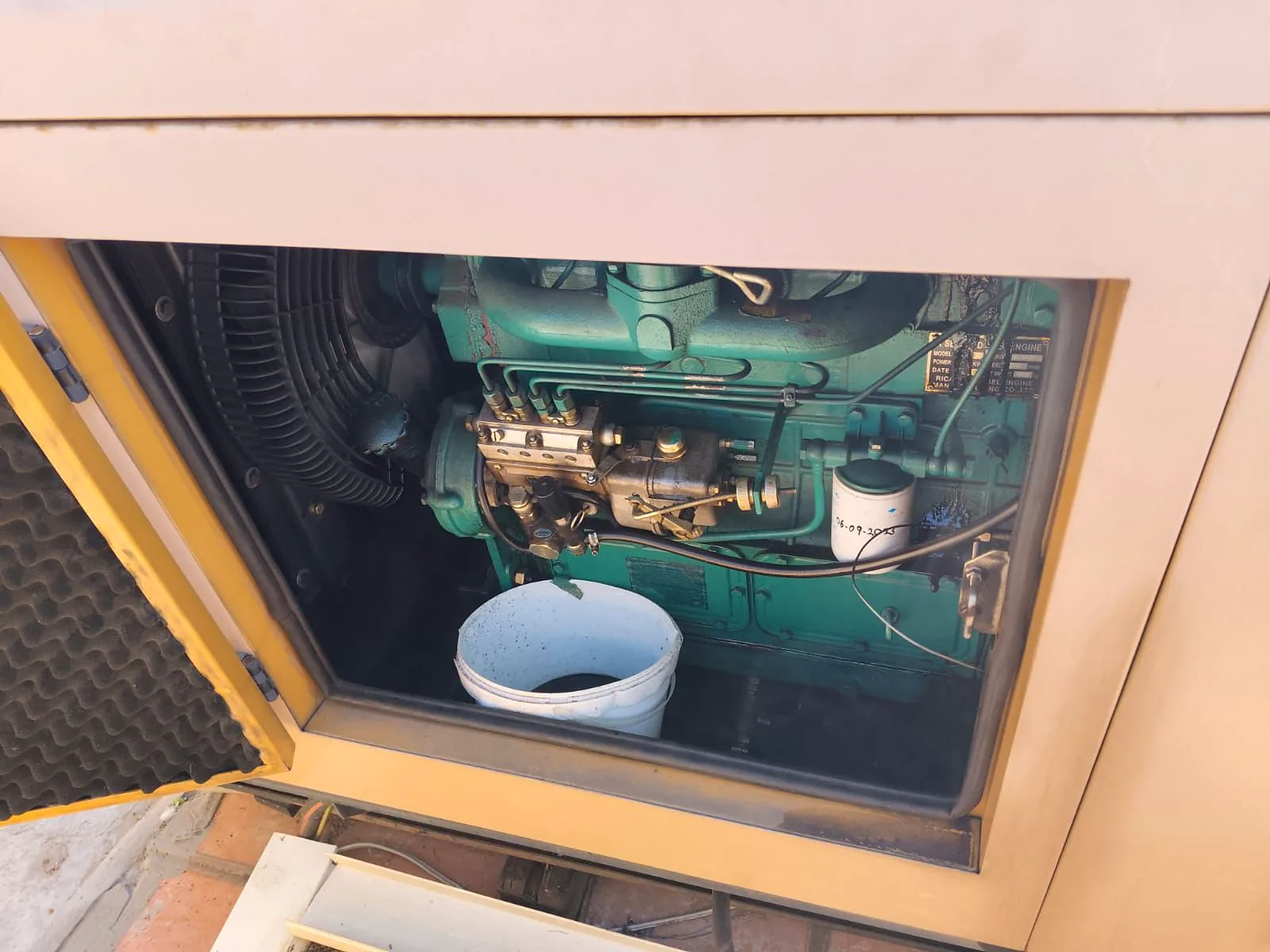
Why service a generator that works?
A generator that seems fine can still fail on the day
A standby generator spends most of its life waiting. While it waits, engine oil takes up moisture and acids, the battery slowly loses charge, rubber hoses and belts harden, and stored diesel can take on water and grow microbial sludge.
None of that shows until the mains fails and the generator has to start at once and carry the load for hours. A service finds it while the power is still on, which is the cheapest and calmest time to fix it.
Mechanical faults give early signs at a service too: a radiator core packed with dust or a slipping fan belt that can lead to overheating, oil or coolant weeping from a seal or hose (leaks), smoke on start-up, or a slow crank that can end as a generator that will not start.
Fuel problems in particular are covered in our guide to diesel fuel contamination, and a set that shuts down on an oil alarm is explained under low oil pressure shutdown.
Brands
Servicing every make, by the engine inside it
We Service & Repair All Generator Brands. For a service, the brand that matters most is often the engine’s rather than the name on the canopy, because the oil specification, filters and service schedule follow the engine. We read the engine data plate as well as the set nameplate before choosing parts.
Many standby sets, whatever their canopy says, run Perkins engines, and Cummins builds complete generator sets as well as engines for other makers. Portable units are often Honda inverter generators or carry a Honda GX engine, where the service is about oil, the spark plug and petrol that has gone stale. Small silent diesels, such as many Kipor units, hold only a little oil and work hard inside a compact canopy, so oil condition and a clear cooling-air path matter more than the hours alone suggest.
Most current controllers, including modules from Deep Sea Electronics, ComAp and SmartGen, keep an event log and a maintenance reminder. We read the log before the service and reset the reminder after it. Our generator brands page covers each make in more detail.
Service areas
Booking a service anywhere in Gauteng
We service generators on site in all five Gauteng regions: Johannesburg, Pretoria and Centurion, Ekurhuleni on the East Rand, the West Rand and the Vaal Triangle. Because a service is planned, we agree a date and time with you rather than racing a breakdown.
Tell us about access when you book: estate gate and security procedures, keys for a locked enclosure or plant room, and whether the business can accept a short changeover test during working hours. Several generators on one site, or across branches, can each be booked for a service; if you would rather have them scheduled for you, that is a maintenance plan.
FAQ
Frequently asked questions
How often should a generator be serviced?
At the running-hours limit or the time limit in the engine’s manual, whichever comes first. For a standby set that seldom runs, that usually means at least once a year. During load shedding or long outages, follow the hour meter, because daily running can make a service due within weeks. Our guide to service intervals and oil care explains both limits.
What is the difference between a generator service and maintenance?
A service is one visit: oil, filters, fluids, checks and a test run, booked when the generator is due. Maintenance is the ongoing plan around it: services scheduled for you, inspections and test runs between them, and a record of everything done.
Will we lose power while the generator is being serviced?
Not because of the service itself: the building stays on the mains while the generator is stopped and worked on. The generator cannot cover an outage during that time, so we book outside your load-shedding slots. The changeover test is different: on most installations the supply drops for a few seconds at each transfer, so we agree when it happens.
What do I get after the service?
A summary of what was done and what we found, including anything to watch before the next service. Any repair we recommend is quoted separately and free of charge.
What happens if you find a fault during the service?
We explain what we found and give you a free quotation. Nothing is repaired until you agree, and if a fault can safely wait until the next service, we tell you so.
Do you service all makes and sizes?
Yes. We Service & Repair All Generator Brands. That covers diesel, petrol and gas generators, from portable and inverter units to large standby and prime-power sets, across a range of 1 kVA–20,000 kVA.
How long does a generator service take?
It depends on the generator and on what we find. A portable petrol unit is a short job, while a large standby set with a changeover test takes considerably longer. We give you an estimate when you book, based on the make, model and size.
Is there a warranty?
Yes: we offer a one-year warranty. Ask us what it covers for your generator when you book.
Related pages
Related generator problems
Who we work for
Need a generator technician?
- 24/7 operations
- We Arrive Within 1–2 Hours (usually within 1 hour)
- Free callouts and quotations