
Guides · Looking after a generator
How Often Should a Generator Be Serviced, and What Happens to Its Oil?
Service a generator at whichever comes first: the running-hours interval in the engine manufacturer’s schedule, or the time interval, which is usually at least once a year. A standby set that rarely runs reaches the time limit first, because oil, coolant and batteries age while the engine stands; a set working through load shedding can reach its hours within months. Engine oil shows how hard the engine is working, so it is worth checking between services.
Technical guide · Last reviewed 16 October 2026
Hours or time, whichever comes first
Every engine’s operation and maintenance manual lists what is done at set running-hour intervals and at set time intervals. The hour meter on the controller counts the hours; the calendar counts the rest. A prime-power set running daily reaches its hours long before a year passes, while a standby set that runs only on test may take years, so the time interval applies.
As a general picture only, many diesel generator engines call for an oil and filter change somewhere between 250 and 500 running hours, small air-cooled petrol engines much more often, and nearly all at least once a year. Those are typical figures, not yours: the interval that counts is the one in your engine manufacturer’s schedule, shortened if the set works in hard conditions.

How the way a set runs changes the interval
| How the set runs | What it does to oil and filters | What it means for servicing |
|---|---|---|
| Standby, weekly exercise only | What it does to oil and filtersFew hours, but short runs never get the oil hot enough to boil off condensed water and unburnt fuel | What it means for servicingThe time interval decides. Exercise it on load where possible |
| Through heavy load shedding | What it does to oil and filtersTwo outages of two and a half hours a day add about 150 running hours a month | What it means for servicingThe next service can come round in months, not years; watch the hour meter |
| Lightly loaded or oversized | What it does to oil and filtersUnburnt fuel and soot reach the oil, thinning and blackening it | What it means for servicingShorter oil intervals and running on load. See wet stacking |
| Dusty sites | What it does to oil and filtersDust that gets past the air filter becomes abrasive in the oil | What it means for servicingMore frequent air filter checks and oil changes |
| Heat and enclosed canopies | What it does to oil and filtersHeat speeds up oxidation, thickening the oil | What it means for servicingKeep airflow clear; use the severe-duty interval if the manual gives one |
Why oil wears out
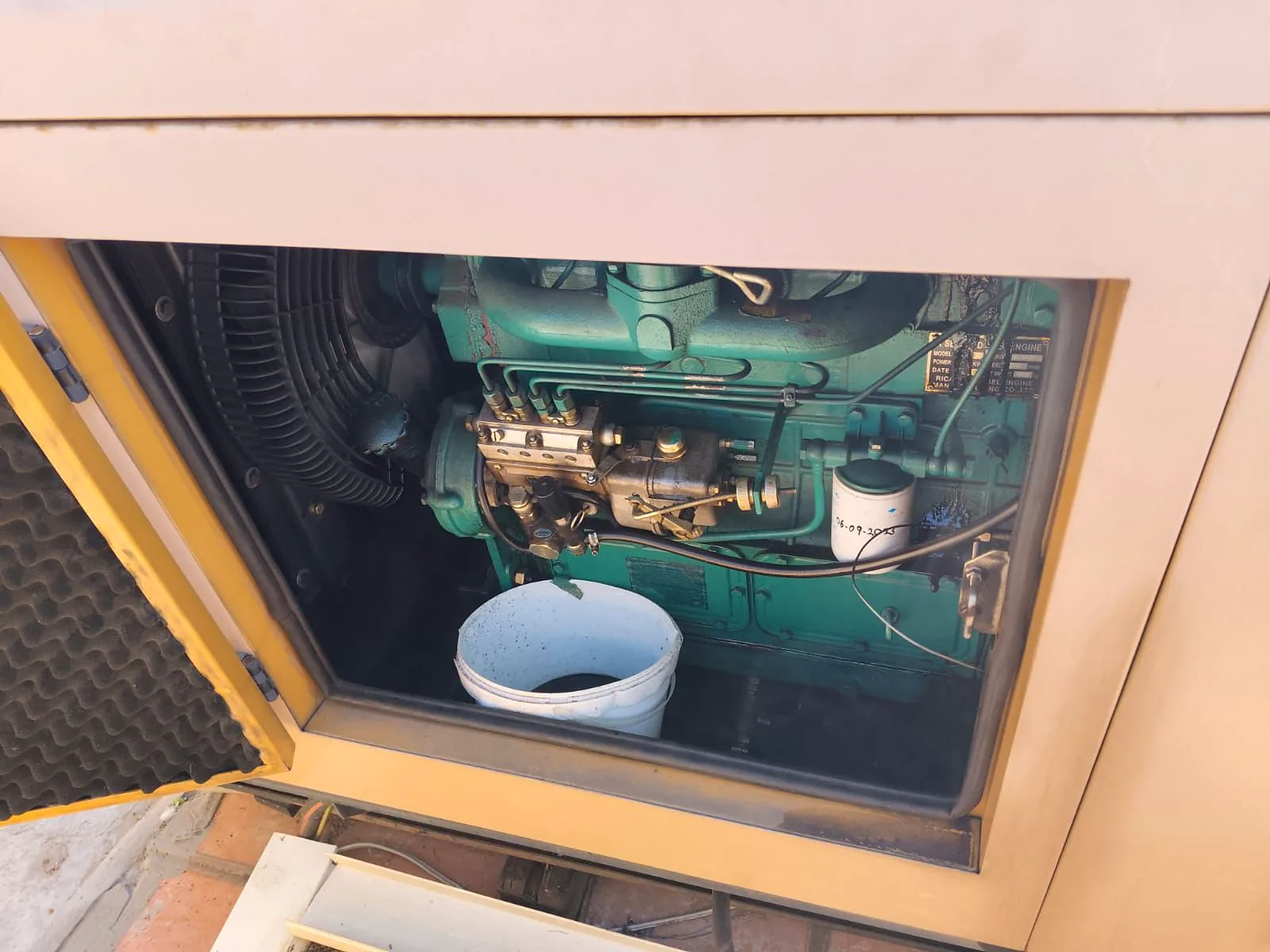
What happens to engine oil
Soot and dirt
Diesel combustion produces soot, and some dirt gets past the air filter. The oil holds them in suspension until it can hold no more, and then they wear the engine.
Oxidation and heat
Heat breaks oil down over time, thickening it and forming deposits. Oil standing in an engine ages too, more slowly.
Acids and moisture
Combustion by-products and condensation form acids and water in the oil, especially in engines that run briefly. Additives neutralise the acids until they are used up.
Fuel dilution: Wet stacking
Light loading, long idling and some injector faults let unburnt diesel wash into the sump and thin the oil. A rising oil level that smells of diesel is a warning.
Choosing oil, in general terms
The engine manual gives a viscosity grade, such as a multigrade 15W-40, and a performance specification, such as an API or ACEA heavy-duty diesel category or the engine maker’s own standard. The grade suits the temperatures the engine sees, and multigrades flow faster on cold Highveld mornings. The specification covers the detergents and additives that hold soot and neutralise acids.
Diesel, petrol and gas engines often call for different oils, and larger gas engines usually need a low-ash gas engine oil. Top up with the same oil that is in the engine, and never overfill: the crankshaft churns excess oil into foam, which can be pushed out past seals or through the breather.
Checking the oil level
A quick check any owner can make. On a standby set, switch the controller to off first so it cannot start.
- Make sure the generator is stopped, standing level, and cannot start automatically
- Check with the engine cold, so the oil has drained back to the sump and nothing is hot to touch
- Pull the dipstick, wipe it, push it fully home and pull it again
- The level should be between the marks; do not overfill
- Top up only with the grade specified for the engine
- Note anything unusual: milky oil, a fuel smell, or a level that has risen
Milky or creamy oil can mean coolant is getting in. Do not run the engine; call us.
What the oil is telling you
| What you see | What it may mean |
|---|---|
| Level dropping between services | What it may meanOil burning (blue smoke) or leaking. See leaks and smoke |
| Level rising, smells of diesel | What it may meanFuel diluting the oil: light loading or an injection fault |
| Milky or creamy oil | What it may meanCoolant or water in the oil: possibly a head gasket or oil cooler |
| Thick or sludgy soon after a service | What it may meanHeavy soot or oxidation: a blocked air filter, worn injectors, overheating or long light-load running. Black on its own is normal in a diesel |
| Metallic particles on the dipstick | What it may meanInternal wear; stop and have it inspected |
| Low oil pressure alarm | What it may meanLow level, diluted oil or wear; do not keep restarting. See low oil pressure shutdown |
Oil analysis: when it is worth doing
An oil analysis sends a small sample of used oil to a laboratory, which reports wear metals such as iron, copper and aluminium, contamination by fuel, coolant, dust or soot, and whether the oil’s viscosity and additives are still within limits. One result is a snapshot; a series taken at each service shows trends, such as a rising wear metal that points to a failing part before it fails.
It earns its place on large, critical or hard-working sets, such as those for hospitals, data rooms, factories and prime power. On a small home standby set, changing the oil on schedule is usually the simpler choice. For useful results the sample is taken from warm, well-mixed oil at the same point each time, with the hours on the oil recorded.
Keeping a service record
| Record | Why it helps |
|---|---|
| Date and hour-meter reading | Why it helpsShows when the next service falls due, by time or by hours |
| Oil grade, quantity and filters fitted | Why it helpsTop-ups and the next service use the right parts |
| Coolant strength and battery test results | Why it helpsShows a slow decline before it causes a failure |
| Water drained and fuel filters changed | Why it helpsLinks fuel trouble to its source. See diesel fuel contamination |
| Alarms since the last visit | Why it helpsPatterns point to developing faults. See controller alarms |
Booking the next service
Our generator servicing follows the engine manufacturer’s schedule, and the service checklist shows what each visit covers. If your set runs hard through load shedding or is critical to your business, a maintenance plan keeps the intervals on track for you. When you book, send the make, model, current hour-meter reading and the date of the last service if you know it.
FAQ
Frequently asked questions
How often should a standby generator be serviced?
At least once a year by time, or sooner if it reaches the running-hours interval in the engine manufacturer’s schedule. Sets that run through long outages can reach their hours within a few months. See generator servicing.
Does load shedding mean my generator needs servicing more often?
Usually, yes, because servicing follows running hours as well as time. During heavy load shedding, read the hour meter monthly and book when it nears the next interval rather than waiting for the year to pass.
Does the oil need changing if the generator has hardly run?
Yes, at the time interval. Oil standing in an engine collects moisture and acids from short runs and condensation, and its additives age. Low hours slow the wear, not the ageing.
Can I use any engine oil?
No. Use the viscosity grade and specification in the engine manual. Diesel, petrol and gas engines often call for different oils, and the wrong one can shorten engine life.
Can I change the oil myself?
On a small portable petrol generator, the owner’s manual usually shows how; take the used oil for recycling. On an automatic standby set, have it done at a service, where the set is isolated and the filters and other checks are done at the same time.
Related pages
Related services
Related generator problems
Generator types
Need a generator technician?
- 24/7 operations
- We Arrive Within 1–2 Hours (usually within 1 hour)
- Free callouts and quotations