
Guides · How it works
What Your Generator’s Controller Alarm Is Telling You
A controller alarm tells you which protection limit was crossed, and its category tells you how serious it is: a warning lets the generator keep running, an electrical trip disconnects the load and then stops the engine, and a shutdown stops the engine at once. Photograph the alarm before you reset anything, because the alarm name points to where to look, not always to what has failed.
Technical guide · Last reviewed 16 October 2026
Alarm categories and what each one asks of you
| Category | What the controller does | What you should do |
|---|---|---|
| Warning (pre-alarm) | What the controller doesShows the alarm and sounds the buzzer; the set keeps running | What you should doNote it and arrange a check soon. A warning that clears itself still has a cause |
| Electrical trip | What the controller doesOpens the generator breaker, runs the engine unloaded to cool down, then stops it | What you should doFind out why before reconnecting. A trip often points to the load, not the generator |
| Shutdown | What the controller doesStops the engine immediately and stays locked out until it is reset | What you should doDo not keep restarting. Call a technician |
| Maintenance alarm | What the controller doesA reminder that the service hours or time have been reached | What you should doBook the service |

An alarm names the input, not the fault
The controller cannot see inside the engine. It reads sensors: oil pressure and coolant temperature senders, a magnetic pickup or the alternator’s frequency for speed, the alternator output and the battery voltage. When a reading stays past its limit for longer than the set delay, it raises the alarm configured for that input.
So one alarm can have very different causes. A low oil pressure shutdown may be a genuine loss of pressure, which can ruin bearings quickly, or a failed sender giving a false reading; only an independent measurement tells them apart. Timing is a clue too: oil pressure alarms are ignored while the engine cranks and for a few seconds after, so an alarm the moment that delay ends means something different from one after an hour on load.
Engine protection
Engine alarms and what they usually point to
Low oil pressure
Low oil level, the wrong or diluted oil, a worn oil pump or bearings, or a faulty sender or its wiring. Treat it as real until a technician proves otherwise.
High coolant temperature: Overheating
Low coolant, a clogged radiator, a slipping fan belt, a stuck thermostat, hot air recirculating in the canopy, or overload. A sender fault can raise it on a cool engine.
Overspeed and underspeed: Surging and hunting
The governor or actuator, the fuel supply, a large load switched on or off suddenly, or the speed pickup. Overspeed is set as a shutdown because a runaway engine is dangerous.
Fail to start: Generator not starting
The engine did not fire within the set crank attempts: a weak battery, the starter, no fuel or air in the lines, a fuel solenoid, or glow plugs on a cold morning.
Charge alternator failure and battery voltage: Battery not charging
The belt-driven charging alternator has stopped charging, or the battery or its mains charger is failing. Left alone, the next start fails.
Low fuel level
Usually exactly what it says, though a stuck float or faulty level sender can raise it on a full tank. Some sets stop on very low fuel so the injection system does not draw air.
Electrical and system alarms
| Alarm | What it usually points to |
|---|---|
| Over or under voltage | What it usually points toThe AVR or excitation, the sensing wiring, a loose connection, or engine speed. See voltage problems. |
| Overcurrent or overload | What it usually points toMore load than the set’s rating, a large motor starting, or a wiring fault in the building. Brief overloads are tolerated and sustained ones trip; a short circuit trips at once. |
| Emergency stop | What it usually points toA stop button pressed on the panel, the canopy or elsewhere on site. The stop circuit is wired so that a break also stops the engine, so this alarm with no button pressed points to a broken wire or a faulty switch. |
| Engine ECU or communication alarm | What it usually points toOn electronic engines, the engine computer’s own diagnostic messages, or lost contact with it. These need diagnostic equipment. |
| Mains failure or mains return | What it usually points toEvents, not faults: they start and stop an automatic set. If they appear while the mains is healthy, see changeover and ATS problems. |
Wording and fault-code numbers differ between controllers such as Deep Sea Electronics, ComAp and SmartGen, and between models, so we do not list codes. The alarm text and your controller’s manual are the reliable reference.
Evidence
Reading the screen and the event log
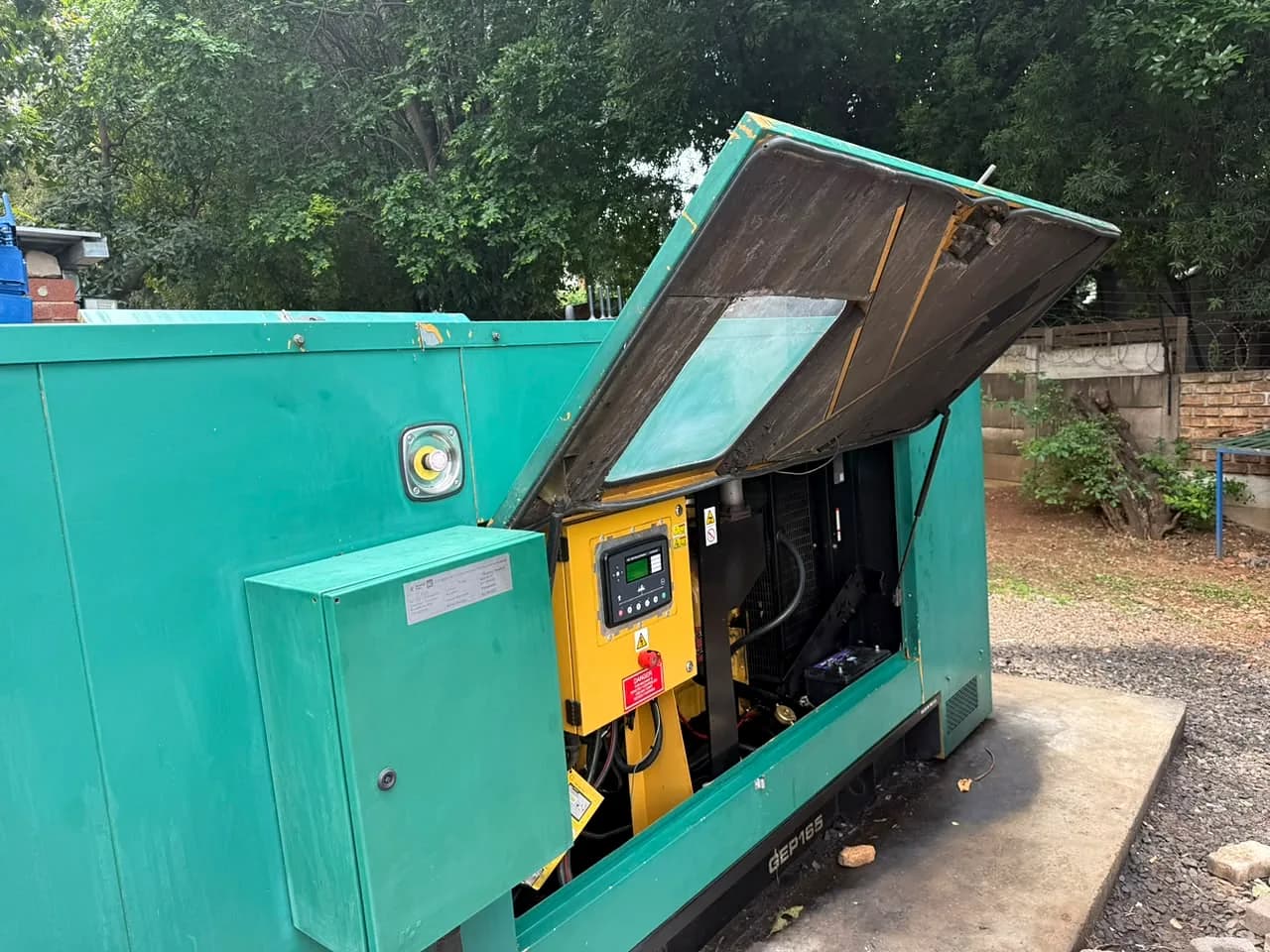
Most modern controllers show the active alarm as text and keep an event log of past alarms, stamped with the date and time or the engine hours. A warning logged for weeks tells a different story from a one-off. On older panels with a row of lamps, note which lamp is lit before anything is reset, because a reset clears the evidence.
- Photograph the whole screen
- Note the hour-meter reading
- Note whether the engine stopped or only the breaker opened
- Stay out of the settings menus
For owners
What to do when an alarm appears
- 01
Record it
Photograph the alarm and note what the set was doing: starting, running on load or stopping.
- 02
Make it safe
If it is running with smoke, a knock or a leak, press the emergency stop. Otherwise switch the controller to off so it cannot start.
- 03
Check only what is safe
Check the fuel level and the stop buttons, and look from outside for leaks or blocked air vents. Check oil and coolant only on a cold engine.
- 04
Reset once, if the cause is clear
If the cause is obvious and dealt with, such as a stop button pressed by accident, reset and return to auto.
- 05
Call if it returns
If the same alarm comes back, or it was oil pressure, temperature or overspeed, leave the set off and send us the photo.
Why alarms appear more often during load shedding
Load shedding means several starts a day and long runs on load. Every start draws heavily on the starting battery, and an ageing battery or a weak charger that coped with weekly tests begins to fall behind, so low battery voltage and fail to start alarms become common, especially on cold Highveld mornings. Long summer runs with a dusty radiator turn a temperature warning into a high coolant temperature shutdown, and surges from summer thunderstorms can damage the battery charger or the mains sensing circuit.
Running hours climb quickly too, so a maintenance due alarm can arrive months early; our guide to service intervals and oil care explains why the hours matter.
When an alarm needs a technician
Call a technician for any shutdown that returns after one reset, for oil pressure, temperature or overspeed, and for anything pointing to the controller or changeover. We read the event log, measure the real values independently and repair whatever is at fault. Controller faults are control panel repairs, engine and alternator faults are generator repairs, and a set that has stopped mid-outage is an emergency repair. Send the make, model, hour-meter reading and a photo of the screen.
FAQ
Frequently asked questions
Is it safe to reset a generator alarm and restart it?
Once, if you know the cause and have dealt with it. Never keep resetting a low oil pressure, high temperature or overspeed shutdown: each restart runs the engine with the fault that just stopped it.
Why did the power go off while the generator kept running for a few minutes?
That is usually an electrical trip: the breaker opened to protect the alternator or the load, and the engine ran unloaded to cool down. The cause is often too much load or a wiring fault. See shutting down or tripping.
Why does the same alarm keep coming and going?
A warning that clears itself and returns usually means a reading hovering near its limit, or an intermittent connection such as a loose sender plug, a chafed wire or a corroded earth. The event log shows how often it happens and when. Have the wiring and the real value checked before the warning becomes a shutdown.
Can the alarm settings be changed?
They can, but limits and delays are set to protect the engine and alternator. A change made without understanding them can leave the set unprotected, so it should be made by a technician and recorded.
Where can I find what my controller’s alarm means?
In the manual for your exact controller. Our pages on Deep Sea Electronics, ComAp and SmartGen explain how the main controller families work.
Related pages
Related services
Related generator problems
Generator types
Related brands
Who we work for
Need a generator technician?
- 24/7 operations
- We Arrive Within 1–2 Hours (usually within 1 hour)
- Free callouts and quotations