
Repair costs
How Much Does a Generator Repair Cost?
The short answer
It depends on the fault, the parts it needs and the size of the generator, so there is no honest fixed price until the fault is found. Two things are fixed: we offer free callouts and quotations, and no work starts until you have seen and accepted the price.
- Free callouts and quotations
- Work starts only after you accept the quotation
- Further faults found during a job are quoted before they are fixed
- One-year warranty on our work
Need it fixed rather than diagnosed?
Free callouts and quotations. We arrive within 1–2 hours, usually within 1 hour.
Cost factors
What decides the price of a repair
Diagnosis
Many faults are found on the first visit. We read the controller alarms, check the battery, fuel and connections, and test the output. A fault that shows only at full load, or on a cold Highveld morning, may need a load test or a longer run, and we explain what that involves first.
The fault itself
A small fault is a small job; a major failure means more parts, more hours and sometimes a workshop. A loose terminal or a blown fuse takes minutes to put right. The table below shows how each fault area changes the work.
Parts
Common parts are quick to source; others may have to be ordered. Filters, belts, batteries and fuses are easy to find; controllers, AVRs, injection pumps and imported parts can take longer. Where a suitable equivalent part exists, we explain the choice before you decide.
Generator size (kVA)
A 5 kVA petrol unit and a 500 kVA diesel set share little but the name. Bigger sets take more oil, coolant and filters, carry more alternator and controller parts, and may need lifting equipment. After a major repair, a large set should be proved under load with load bank testing.
Fuel type
Each fuel brings its own parts to check and replace. Diesel adds injectors, pumps, filters and a water separator, all at risk from contaminated diesel. Stale petrol gums up carburettors. Gas generators add a regulator and gas train, and work on the gas supply needs a registered gas practitioner.
Access and travel
The free callout covers getting to you; awkward access takes longer. Basements, parkades, rooftops, narrow side passages and security controls all slow safe work down. A part that has to be ordered in may need a second visit to fit, and the quotation says so.
Urgency
If timing affects the price, the quotation says so before you accept it. An emergency repair during a power cut may need parts found outside trading hours or sent by express courier, and a temporary repair to get the power back before the permanent fix.
Knock-on damage
Switching off and calling early is the cheapest thing you can do. Running on after a warning, leaving water in the fuel, or restarting again and again after a shutdown can turn a small repair into a large one. Our guide to controller alarms explains which alarms mean stop.
Fault areas
How the fault changes the work
| Fault area | Usual work | What moves the cost |
|---|---|---|
| Battery, charger or starter | Usual workTesting the battery, battery charger and charge alternator; cleaning terminals; replacing the battery or repairing the starter motor | What moves the costBattery size and type; whether the starter motor can be repaired or must be replaced |
| Fuel system | Usual workDraining water, replacing the fuel filters and water separator, bleeding the system, and testing the lift pump and injectors | What moves the costHow far contamination has spread; whether the injectors or injection pump need specialist work |
| AVR and no output | Usual workTesting the AVR, exciter, rotating diodes and windings; restoring residual magnetism; replacing the AVR | What moves the costWhether the fault is in the AVR or deeper in the alternator |
| Controller and changeover | Usual workReading alarms, testing sensors and wiring, and repairing the controller, ATS contactors or mains sensing | What moves the costThe controller model and whether it is still available; how the changeover panel is wired |
| Overheating and cooling | Usual workChecking the coolant, thermostat, radiator, fan belt and water pump; flushing or repairing the radiator | What moves the costWhether the engine has already been damaged by running hot |
| Engine wear and oil pressure | Usual workCompression and oil-pressure tests; head gasket, valve or bearing work, or a full rebuild | What moves the costHow far the internal wear has gone, and parts availability for that engine |
| Alternator windings | Usual workInsulation testing, then rewinding the stator or rotor in a workshop, or replacing the alternator | What moves the costAlternator size; the cost of rewinding compared with a replacement alternator |
Not sure which row fits? The generator problems guides explain the symptoms behind each fault.
Quotations
How a free quotation works
- 01
Tell us what is happening
Call or WhatsApp 076 434 7292, or send the enquiry form. Photos of the rating plate and the controller screen help us bring the right parts.
- 02
We come to you
For a breakdown, we arrive within 1–2 hours, usually within 1 hour. For a service or a quotation that is not urgent, we agree a time that suits you.
- 03
We find the fault
The technician checks the controller alarms, battery, fuel, wiring and output, and tests the suspect parts until the cause is clear.
- 04
You get the price
The quotation sets out the work and the parts. If replacement makes more sense than repair, we tell you.
- 05
You decide
Work starts only once you accept. If we find a further fault during the job, we stop and ask before fixing it.
Diagnosis first
Why we quote after finding the fault
Two generators with the same symptom can need completely different repairs. "Runs but no power" might be a tripped breaker or a failed AVR; "will not start" might be a flat battery or a failed starter motor. A price given before the fault is found is a guess, and guesses either overcharge you or change on the day.
That is why the callout is free: so the quotation you accept is for the repair the generator actually needs, not a list of parts swapped in the hope that one of them was the problem.
It also stops you paying twice. A new battery fitted to a standby generator whose battery charger has failed is soon flat again, and the next start during load shedding fails. A proper diagnosis finds the cause, not just the part that gave up first.
Before we arrive
What to send for an accurate quote
The more we know before we arrive, the more likely the technician is to have the right parts on hand and to finish the repair on the first visit. A few photos on WhatsApp take a minute and can save a second trip.
Our guide to preparing for a technician visit covers what else helps on the day.
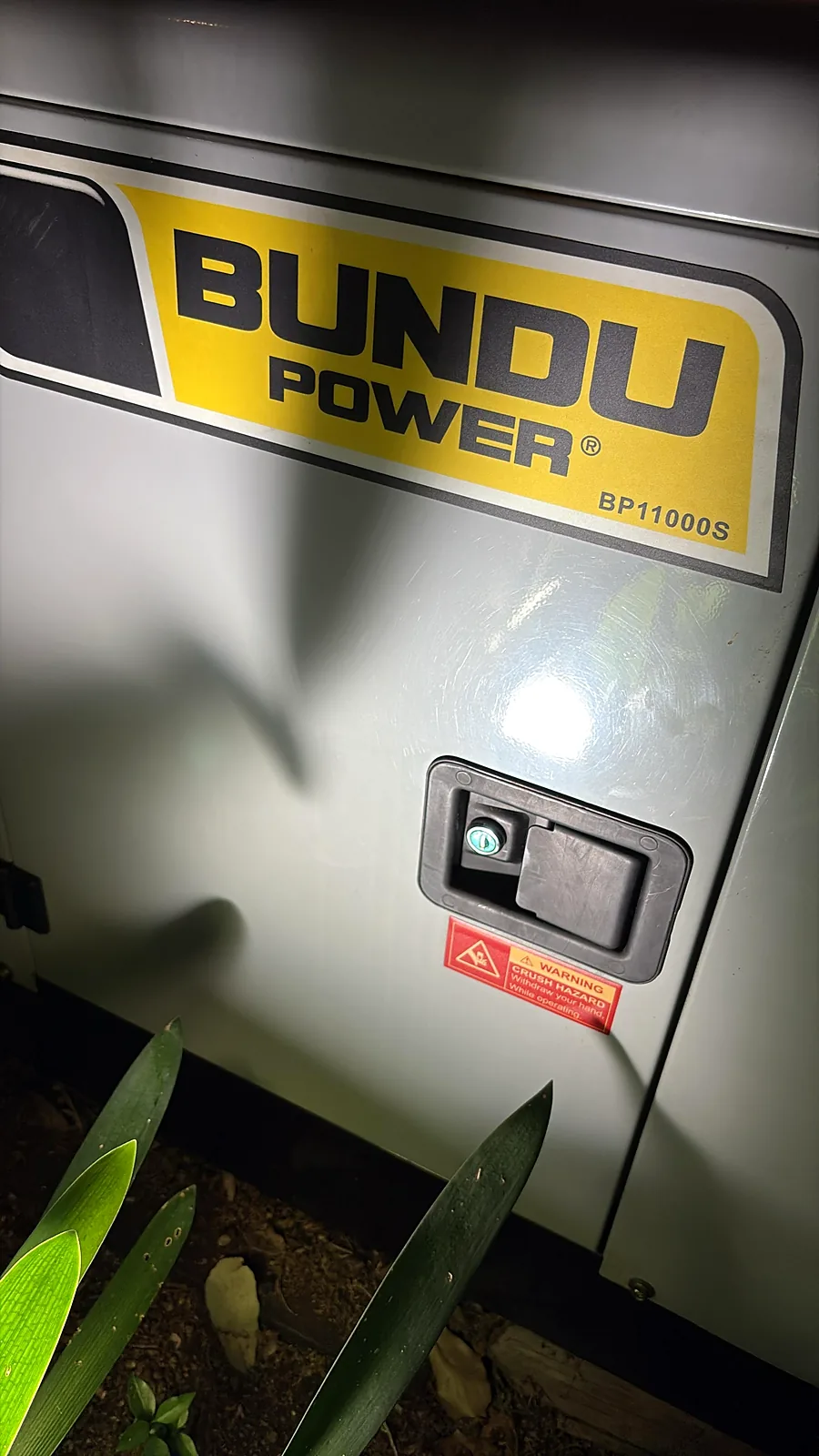
- A photo of the rating plate or model label: make, model and kVA
- A photo of the controller screen showing any alarm
- What happens when you start it or switch the load on
- The hour-meter reading and when it was last serviced
- Any recent fuel delivery, storm, power surge or work done on it
- Where it stands and how we reach it: parkade, roof or security gate
Prevention
How servicing and maintenance keep repair costs down
Most expensive repairs start as cheap ones. A weak battery that is not replaced becomes a failed start in the middle of load shedding; a fuel filter left too long starves the injection pump; a slipping fan belt lets the engine run hot until the head gasket fails. Regular generator servicing catches these while they still cost little to fix.
Standby generators that rarely run have problems of their own. Diesel picks up water from condensation in the tank, batteries sulphate, and seals dry out. A set that only ever runs lightly can also suffer from wet stacking, where unburnt fuel builds up in the exhaust. A maintenance plan with regular test runs, and periodic running under a proper load rather than idling, keeps all of this in check.
Servicing at the interval in the manufacturer's schedule also builds a record of the generator, so when something does fail, the fault is quicker to find. Our guide to service intervals and oil care explains how running hours and calendar time decide when a service is due.
Weighing it up
Repair or replace?
Repair is usually the better value. Batteries, chargers, controllers, AVRs, starter motors and fuel-system parts can all be replaced at a fraction of the cost of a new generator. Replacement starts to make sense when the engine is badly worn, the alternator is beyond rewinding, parts are no longer available, or the generator no longer suits the load it has to carry.
We explain where your generator stands before you decide, and the quotation sets out the repair so you can compare it with a replacement, including installation and changeover. Our repair or replace guide covers the decision in detail, and the kVA sizing guide helps if a replacement needs to be a different size.
FAQ
Questions about cost
Can you give me a price over the phone?
Not a reliable one. The same symptom can come from a blown fuse or a failed alternator. Photos and the controller alarm text help us narrow it down before we arrive, and the callout to find out is free.
What if I decide not to go ahead with the repair?
That is your choice to make. The callout and the quotation are free, and work starts only once you accept the quotation, so asking for one does not commit you to anything.
Will the price change once the work has started?
Not without your say-so. If we find a further fault while the generator is open, such as a cracked fan belt while we fix a charger, we show you and quote it separately. You decide whether we fix it now, later or not at all.
Does a bigger generator always cost more to repair?
Not always. A blown fuse or a loose connection is much the same job on any generator. Size matters most for consumables and major parts: a large diesel engine takes more oil, coolant and filters, and its alternator, controller and injection parts cost more than those on a small portable set.
Is it cheaper to service a generator than to repair it?
Usually, yes. Regular servicing catches worn belts, weak batteries and dirty fuel before they cause a breakdown, when they cost least to fix.
Is there a warranty on the repair?
Yes. Our work carries a one-year warranty, and our terms and conditions set out how quotations, payment and the warranty work.
Get a free quotation
Tell us what the generator is doing and send a photo of the rating plate. We answer 24/7, and free callouts and quotations mean you see the price before any work starts.