
Generator brands · Controllers
SmartGen HGM Controller Repairs and Replacement
We repair and replace SmartGen generator controllers on site across Gauteng, most often the HGM-series modules fitted to imported diesel sets. Typical calls are a set that will not start when the power fails, an alarm that keeps returning, a display that dies while the engine cranks, or a module with the wrong settings. We check the wiring and senders first, then repair, reconfigure or replace the module and test the full start and changeover.
Established 2006
20 years of experience
24/7 operations
We Arrive Within 1–2 Hours
(usually within 1 hour)
Free callouts and quotations
One-year warranty
Qualified and certified technicians
We Service & Repair All Generator Brands
All generator makes and models
1 kVA–20,000 kVA capability
Where you will find a SmartGen controller
SmartGen modules are fitted at the factory to many imported diesel sets, from small silent units at homes to larger sets for shops, farms and workshops. They are also a popular replacement when an older set’s original panel fails, because they are easy to obtain and cover the common auto-start and mains-failure jobs.
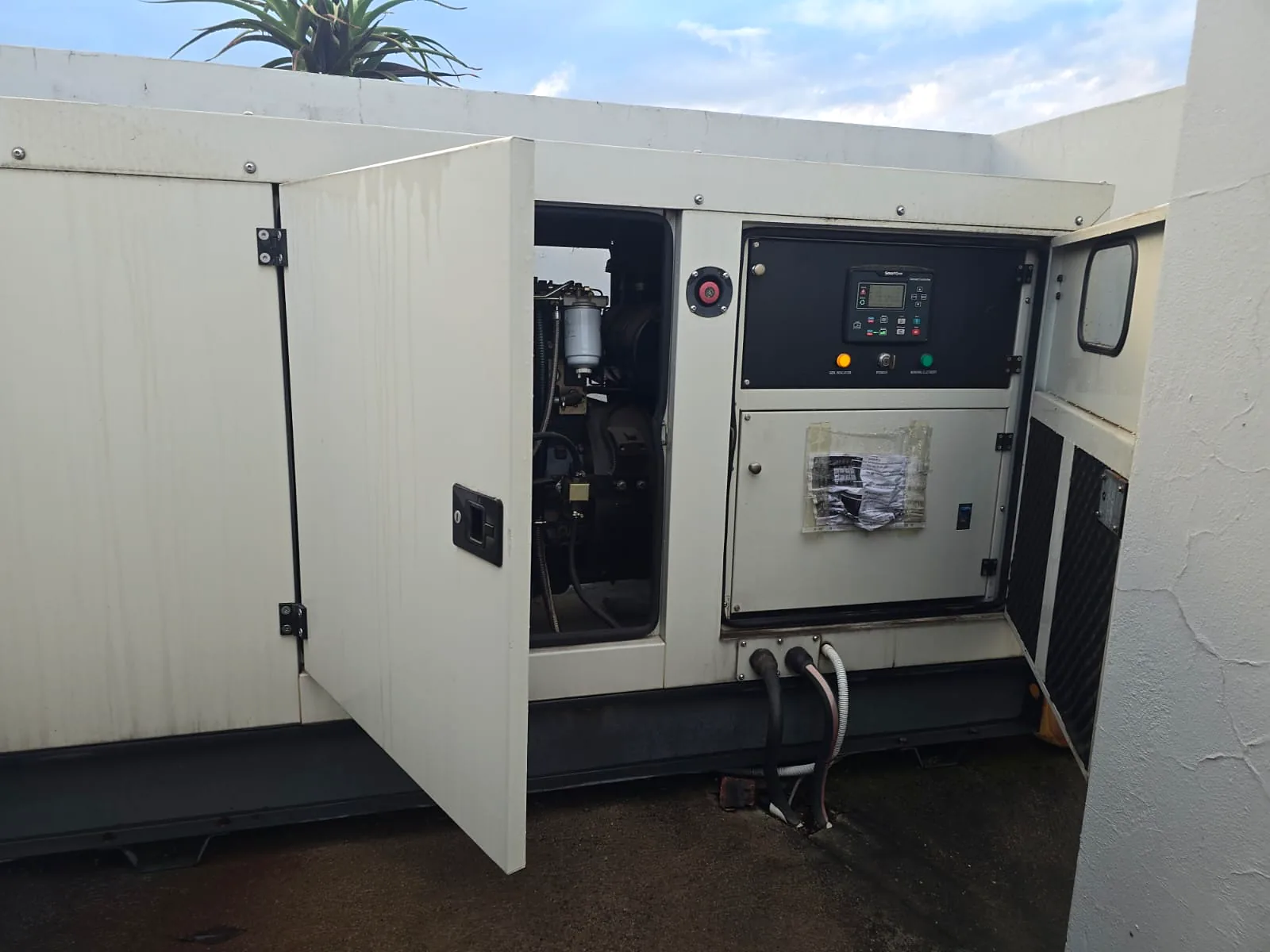
That second use has a catch: on refitted sets the wiring is often not original, and the labels, drawings and module settings may not agree. We check the actual connections before relying on any of them. The photo at the top of this page shows a SmartGen controller mounted in a generator’s control panel.
What is fitted
The SmartGen units on a typical set
HGM6100 series
Compact modules. The HGM6110 starts on a remote signal; the HGM6120 also watches the mains and runs the changeover.
HGM7200 series
A step up, such as the HGM7210 and HGM7220, with more inputs, outputs and functions for larger sets.
Chargers and ATS controllers
Some sets also carry a SmartGen battery charger, and some transfer panels use a separate SmartGen ATS controller.
Typical faults on SmartGen-controlled sets
| Symptom | Likely causes | Repair route |
|---|---|---|
| Starts in manual but not in auto | Likely causesNot in auto mode, an alarm still latched, an open remote start input on an auto-start module, a configuration error | Repair routeChangeover and ATS problems |
| Starts while the mains is on | Likely causesBlown mains sensing fuse, loose sensing wire, mains voltage limits set too tight | Repair routeChangeover and ATS problems |
| Display dies or resets while cranking | Likely causesWeak battery, poor supply or earth connection, failed charger | Repair routeBattery not charging |
| Fail to start alarm | Likely causesNo fuel, fuel solenoid output or relay, weak battery, crank time or crank disconnect set wrongly | Repair routeGenerator not starting |
| Low oil pressure alarm | Likely causesA real pressure fault, or a wrong sender type in the settings, a failed sender or damaged sender wiring | Repair routeLow oil pressure shutdown |
| Runs, but the load never transfers | Likely causesChangeover output or relay, contactor coil, interlock, output outside the module’s limits | Repair routeRunning but no power |
| Wrong voltage or current on the display | Likely causesSensing wiring, current transformer ratio set wrongly, or a genuine output fault | Repair routeVoltage problems |
Auto mains failure
Mains sensing and the changeover on small imported sets
On a typical home or small-business set, an HGM6120 or similar module watches the incoming mains through small sensing fuses. When the mains fails it waits out a short delay, starts the engine, lets it settle and switches the changeover contactors. When the supply is back and stable, it transfers back and cools the engine before stopping.
Many faults are around the module, not inside it: a blown sensing fuse, contactor contacts worn by years of load-shedding cycles, a burnt-out contactor coil or a stuck interlock. Highveld lightning can also reach the module through the mains sensing wires.
The photo shows a small silent diesel set with automatic start, the kind of installation described here. It is an example of the type of equipment and is not presented as a SmartGen unit.

After a SmartGen module is replaced or set back to defaults, we check
A new module arrives on factory default settings, and restoring the defaults wipes the old one’s set-up. Neither suits your set until it is configured:
- Engine type, speed sensing and crank disconnect
- Oil pressure and temperature sender types, against a test gauge
- Mains and generator voltage and frequency limits
- Start delay, transfer, return and cool-down timers
- Output assignments for fuel, start, preheat and changeover
- The current transformer ratio, so load readings are true
- A full simulated mains failure, transfer, return and stop
The configuration is set to match the generator and confirmed by testing. See control panel repairs for the wider controller work we do.
Independent service
We Service & Repair All Generator Brands
Onsite Generator Repairs is an independent generator specialist. We repair, service and maintain SmartGen equipment as part of our work on every make of generator.
Manufacturer warranty claims go through the manufacturer’s own network. If your generator is still under warranty, check the warranty terms before arranging work by anyone else.
Brand names and trademarks belong to their respective owners. Onsite Generator Repairs is an independent service and repair company.
Service areas
Where we work in Gauteng
FAQ
Frequently asked questions
Can a SmartGen module replace my generator’s original controller?
On a single set, often yes, including sets that came with a Deep Sea Electronics or ComAp controller. The terminals differ, so it is a rewiring and configuration job rather than a straight swap.
The SmartGen display shows an alarm I do not understand. What should I do?
Photograph the screen and call us; do not keep resetting it. Our controller alarms guide explains the common alarm types.
Is a faulty SmartGen module repaired or replaced?
What usually gets repaired is the wiring, senders, fuses and relays around it. If the module itself has failed, fitting the same or an equivalent model is normally the sensible choice.
What details help you quote?
The set’s make and kVA, the HGM model from the module’s label, the hour-meter reading and a photo of the screen when the fault shows.
Related pages
Related services
Related generator problems
Generator types
Related brands
Who we work for
Need a generator technician?
- 24/7 operations
- We Arrive Within 1–2 Hours (usually within 1 hour)
- Free callouts and quotations