
Generator problems
Generator Leaks: How to Tell Fuel, Oil and Coolant Apart
The short answer
Start by identifying the fluid. Diesel is thin, clear to pale yellow and has a sharp fuel smell; used engine oil is brown to black and slippery; coolant is usually green, pink, orange or blue and smells sweet. A fuel leak is a fire risk: switch the generator off, keep flames and sparks away and do not restart it until the leak is repaired.
- Fuel leak: switch off, no flames or sparks, do not restart
- Note the colour, the smell and where the drips land
- Contain spills with sand or an absorbent, never with water
- Black oily drips at the exhaust are usually wet stacking, not a leak
Need it fixed rather than diagnosed?
Free callouts and quotations. We arrive within 1–2 hours, usually within 1 hour.
Which fluid is it?
| Symptom | Likely causes | Repair route |
|---|---|---|
| Thin, oily fluid that smells of diesel | Likely causesFuel hose or clamp, filter or water-separator seal, lift pump, return lines, tank fittings | Repair routeFuel system repairs |
| Diesel wetness around the injectors or their pipes | Likely causesA loose or cracked injector pipe, a leak-off line, or an injector seal | Repair routeFuel system repair; do not run it |
| Strong petrol smell around a portable unit | Likely causesCarburettor float or needle sticking, a leaking fuel tap, a cracked fuel line, an overfilled tank | Repair routePortable generator repair |
| Brown or black oil under the engine | Likely causesSump plug, oil filter seal, rocker cover or sump gasket, crankshaft seals, turbocharger oil feed or drain lines | Repair routeEngine repair |
| Green, pink, orange or blue fluid with a sweet smell | Likely causesCoolant hoses or clamps, radiator core, water pump seal, drain tap, core plugs | Repair routeCooling repair; check for overheating |
| Black, sooty, oily drips at exhaust joints or the outlet | Likely causesWet stacking: unburnt fuel and oil from running too lightly, not a leak | Repair routeWet stacking |
| Clear water dripping from the exhaust after a short run | Likely causesCondensation in a cold exhaust, or rain entering an outlet without a rain cap | Repair routeUsually nothing; mention it at the next service |
| White or green crust on the battery, acid marks below it | Likely causesA cracked battery case, or a faulty charger overcharging the battery | Repair routeBattery and charger check |
| A new leak just after a service or refuel | Likely causesFilter not seated, plug not tightened, oil overfilled, or fuel forced out of the tank breather | Repair routeQuick check and fix |
Where the drips land
| Where you see it | What usually sits above it | Most likely fluid |
|---|---|---|
| Radiator end of the set | What usually sits above itRadiator, top and bottom hoses, water pump | Most likely fluidCoolant |
| Under the middle of the engine | What usually sits above itSump, oil filter, gaskets, crankshaft seals | Most likely fluidEngine oil |
| Along the side with the filters and injection pump | What usually sits above itFuel filters, water separator, lift pump, injector pipes | Most likely fluidDiesel |
| Around the base frame and tank | What usually sits above itBase tank seams, sight gauge, drain plug, breather, fuel connections | Most likely fluidDiesel |
| Exhaust end, outlet or silencer joints | What usually sits above itExhaust manifold, turbocharger, silencer | Most likely fluidWet stacking residue or condensation |
| Under the alternator | What usually sits above itNothing that holds fluid; it has run back along the frame | Most likely fluidUsually oil or diesel from the engine |
With the set stopped and cold, slide a sheet of clean cardboard under the engine, well away from the exhaust, and check it the next day. The stain shows exactly where the drip falls and its colour.
Causes explained
Where leaks usually start
Fuel hoses and clamps: Fuel system repairs
Rubber fuel hoses harden and crack with heat and age, and clamps loosen with vibration. Air drawn in at the same point can also cause hard starting and loss of power.
Filters and water separators
A filter seal that is not seated after a change, a cracked separator bowl or a loose drain tap. These leaks often appear within hours of a service.
Injector pipes
The pipes between the injection pump and injectors carry fuel at very high pressure. Missing clamps let them vibrate and crack; a leak here is never a wait-and-see job.
Oil seals and gaskets
Seals and gaskets shrink and harden on engines that stand for long periods. A blocked crankcase breather, or heavy blow-by from a worn engine, pressurises the crankcase and pushes oil past them.
Coolant hoses, radiator and pump: Coolant and radiator care
Hoses perish from the inside, radiator cores corrode, and a drip from the small weep hole under the water pump means its seal is failing.
Tanks, gauges and breathers: Diesel fuel contamination
Steel base tanks rust at seams and drain plugs, sight gauges crack, and overfilling pushes diesel out of the breather. Some seepage only shows when the tank is full.
Why a leak is never just a mess
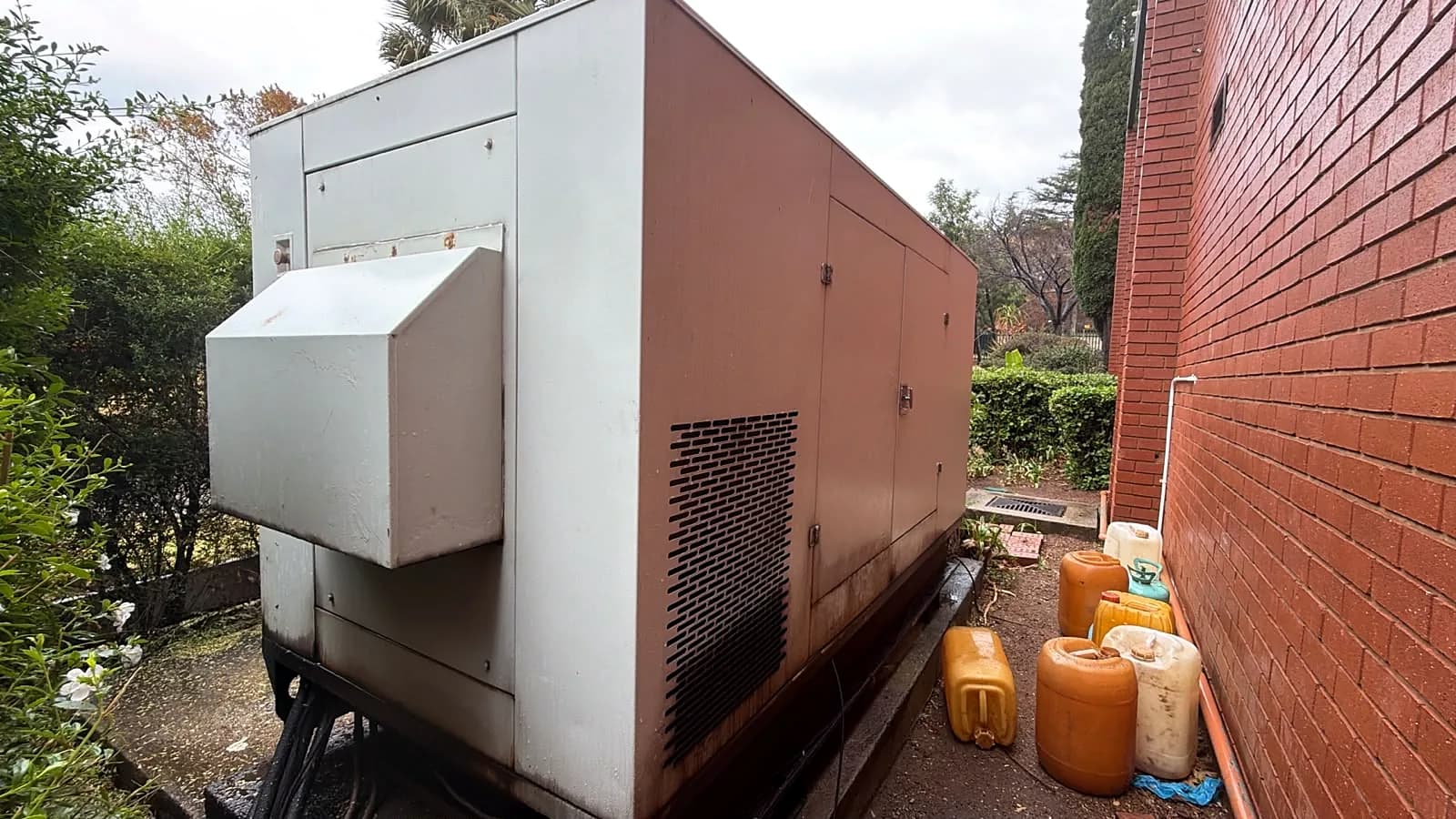
Fire. Exhaust manifolds and turbochargers run hot enough to ignite diesel or oil that drips or sprays onto them, and petrol vapour can ignite from a spark. Fuel containers stored against the canopy add to the risk.
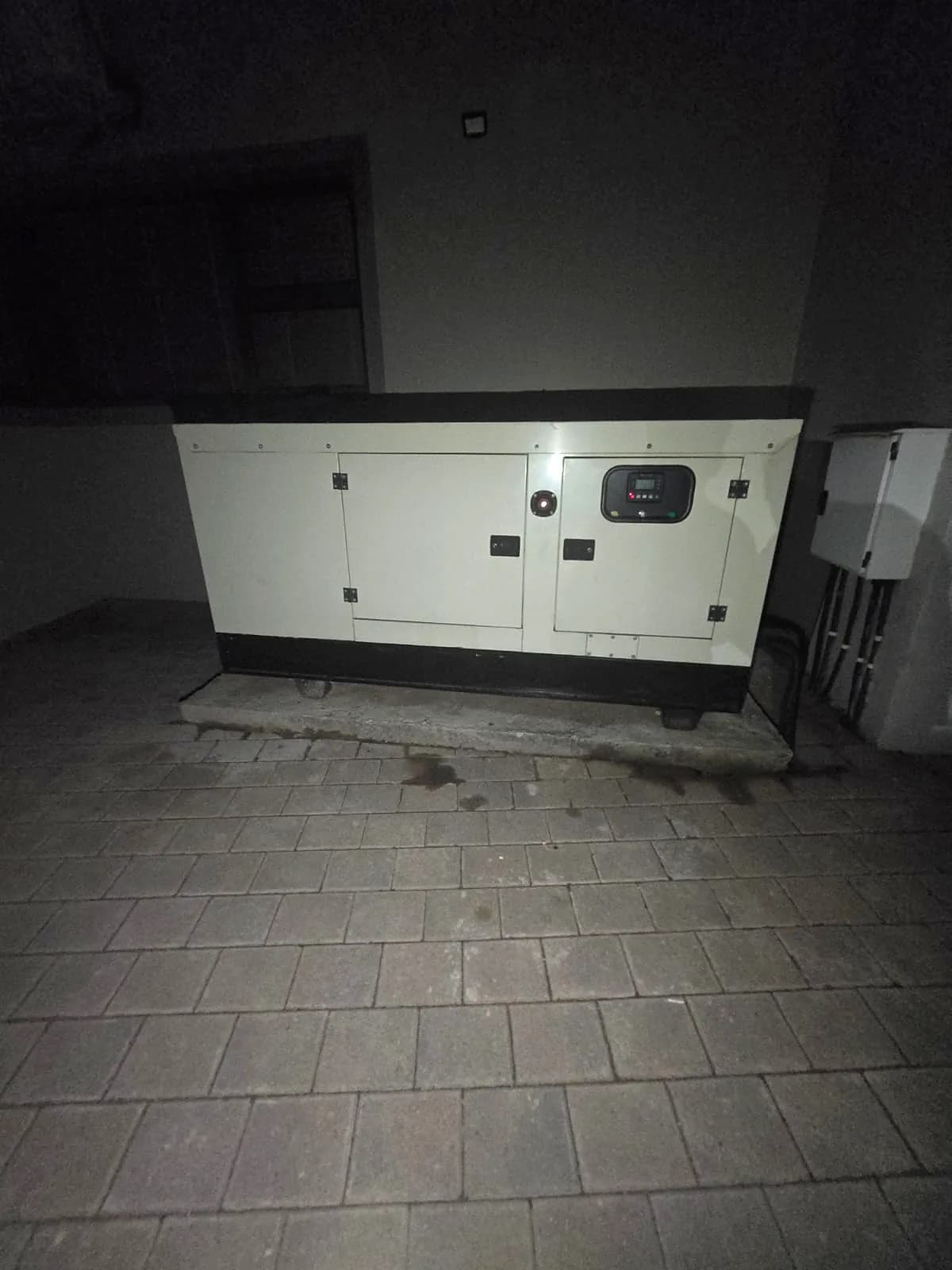
Pollution. Diesel, oil and coolant contaminate soil and stormwater, and on paving they leave lasting stains and a slip hazard. A drip tray or bunded base tank holds small leaks, but only if it is kept empty.
Engine damage. An oil leak lowers the level until the engine runs short of oil or stops on a low oil pressure shutdown. A coolant leak leads to overheating. A fuel leak on the suction side lets air in and starves the engine.
Safe checks you can make
Mostly look rather than touch, with the generator stopped and, if it has been running, cool.
- If it is fuel, switch the generator off at the controller and do not restart it
- Keep flames, cigarettes, grinders and other sources of ignition well away
- Contain the spill with sand, soil or an absorbent; do not hose it into a drain
- Photograph the drips, the puddle and anything wet on the engine
- With the engine cold, check the oil on the dipstick and the coolant in the expansion bottle
- Note whether the set was recently serviced, refuelled or moved
Dispose of soaked absorbent and rags as hazardous waste, not in household refuse.
Diagnosis
How we trace a leak
- 01
Clean and dry
The wet area is degreased so the source can be seen rather than guessed from where the fluid ended up.
- 02
Run and watch
Where it is safe, the set is run to find leaks that only appear with heat, vibration and pressure.
- 03
Pressure-test
The cooling system is pressure-tested cold; fuel connections are checked while the lift pump delivers.
- 04
Repair and recheck
The failed part is replaced, levels are corrected, and the area is checked again after a run.
Leak repairs, and whether the set can run meanwhile
| Leak | What the repair usually involves | Can it run meanwhile? |
|---|---|---|
| Fuel hose, clamp or filter seal | What the repair usually involvesReplace the hose or seal, bleed air from the system, run and recheck | Can it run meanwhile?No |
| Injector pipe or seal | What the repair usually involvesReplace the pipe and fit its clamps, or reseal the injector | Can it run meanwhile?No |
| Base tank or sight gauge | What the repair usually involvesDrain the fuel, repair or replace the fitting, check the fuel for water and sediment | Can it run meanwhile?Not until a technician has checked it |
| Oil seal or gasket | What the repair usually involvesReplace the gasket or seal; clear a blocked breather; a crankshaft seal may mean removing the alternator or flywheel housing | Can it run meanwhile?Only if a technician agrees, with the level checked before each run |
| Coolant hose, radiator or pump | What the repair usually involvesReplace the hose or pump, or repair the radiator; refill and bleed with the correct coolant | Can it run meanwhile?Only if a technician agrees, for short runs, with the level checked cold |
Getting it fixed
Most leaks come down to a hose, seal or fitting that costs far less than the damage it can cause, and many are caught early at a routine generator service, when hoses, seals and clamps are inspected. Fuel leaks are handled through our fuel system repairs; oil and coolant leaks through generator repairs.
Send us your photos with the make, model and kVA, and tell us which fluid you think it is. If the set is your only supply during load shedding and the leak is fuel, call rather than waiting: our emergency generator repair service is there for that.
FAQ
Frequently asked questions
Is a small oil leak a problem?
Yes, over time. It lowers the oil level, can drip onto hot parts and usually gets worse. Fixing a seal early costs far less than repairing damage later.
Why is there oily black residue around the exhaust?
It is usually wet stacking: unburnt fuel and oil from a diesel that runs at light load for long periods. It needs the loading corrected, not a seal replaced.
Is water dripping from the exhaust a leak?
Usually not. Burning diesel makes water vapour, which condenses in a cold exhaust and drips out on short runs. If it continues once the engine is warm, or the water is coloured or sweet-smelling, have it checked.
Can I keep running a generator that leaks coolant?
Not for long. Losing coolant leads to overheating and possible engine damage. Check the level when cold and have the leak repaired.
Why does it only leak when it is running, or when the tank is full?
Heat, vibration and pump pressure open up weak joints that stay dry when the engine is stopped. A full tank raises the fuel level above a seeping seam or fitting that is dry when the level is lower.
What should I do with spilled diesel or oil?
Soak it up with sand or an absorbent, keep it out of drains and soil, and dispose of the waste as hazardous material. Do not wash it away with water.
Related pages
Related generator problems
Need a generator technician?
- 24/7 operations
- We Arrive Within 1–2 Hours (usually within 1 hour)
- Free callouts and quotations