
Generator problems
Generator Not Starting: Causes, Safe Checks and Repairs
The short answer
Most generators that will not start have a battery or charger problem, a fuel problem, or a control or safety stop blocking the start. What happens when you press start tells you which: if the engine does not turn over, the fault is almost always electrical (the battery, its charger, the emergency stop, the controller or the starter); if it turns over but will not fire, it is usually not getting fuel, with the cold-start aids on a diesel and the spark on a petrol unit the next suspects.
- Check the fuel level and that the emergency stop is released
- Read the controller screen and note any alarm
- Crank for no more than about ten seconds, then rest
- Never use starting spray on a diesel with glow plugs or an intake heater
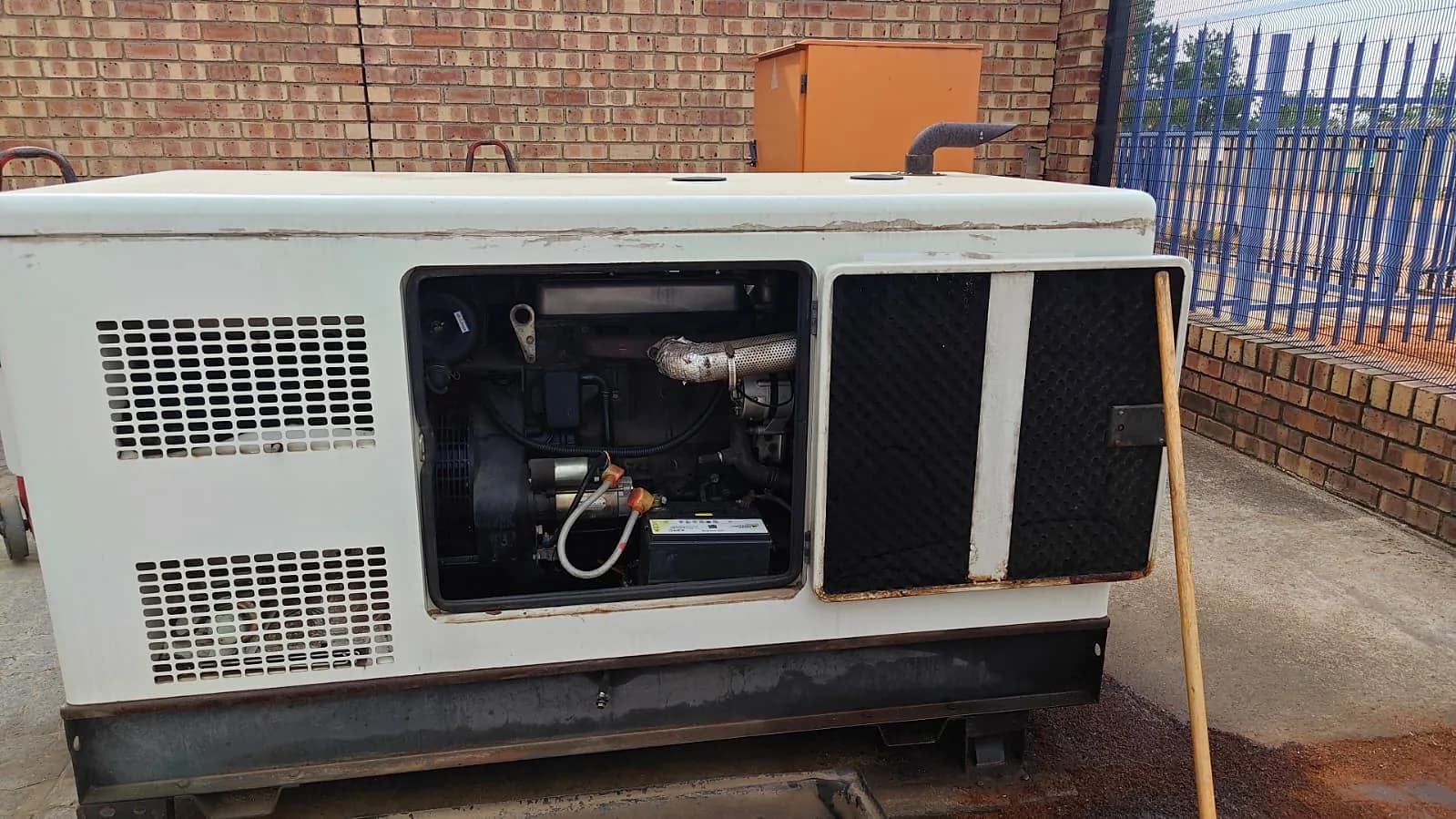
Need it fixed rather than diagnosed?
Free callouts and quotations. We arrive within 1–2 hours, usually within 1 hour.
What happens when you try to start it?
| Symptom | Likely causes | Repair route |
|---|---|---|
| Nothing at all: no sound, blank screen | Likely causesFlat or disconnected battery, blown control fuse, battery isolator switched off | Repair routeBattery and charging |
| A single click, or rapid clicking | Likely causesWeak battery, loose or corroded terminals, starter solenoid | Repair routeBattery, then the starter |
| Screen on, but it will not crank | Likely causesEmergency stop pressed, controller in off or stop, an alarm not yet cleared, start relay or wiring | Repair routeControl panel repairs |
| Cranks slowly | Likely causesBattery run down by repeated starts or cold weather, poor connections, starter motor wear | Repair routeBattery and starter |
| Cranks normally but will not fire | Likely causesEmpty tank, air in the lines, blocked filters or a failed lift pump, fuel shut-off solenoid not opening | Repair routeFuel system repairs |
| Long cranking and white smoke on cold mornings | Likely causesGlow plugs, their relay or the intake heater not working; worn injectors | Repair routeSmoke |
| Fires, runs a few seconds, then stops | Likely causesLow oil level or a false oil pressure reading, fuel starvation, a fuel solenoid that opens while cranking but does not hold, or a speed-sensing fault | Repair routeLow oil pressure shutdown |
| Starts in manual but not when the power goes off | Likely causesController left in manual or off, a mains-sensing fault, a broken start signal from the changeover panel | Repair routeChangeover and ATS problems |
Causes explained
The usual reasons a generator will not start
The battery and its charger: Battery not charging
The most common cause on standby sets. Between outages a mains-powered charger keeps the battery full; if the charger fails, the battery drains slowly and the failure only shows when the mains goes off. An ageing battery can hold its voltage at rest and still collapse when the starter draws current, especially on a cold Highveld morning.
Fuel that is missing, airlocked or dirty: Fuel system repairs
An empty tank, a closed valve, air drawn in after running dry or a filter change, a failed lift pump, or filters blocked by water and sludge. Diesel that has stood for months can take on water and grow diesel bug. A diesel needs a steady supply of air-free fuel at the injection pump before it will fire.
Controls and safety stops: Control panel repairs
An emergency stop left pressed, a controller left in off or manual, or an alarm that has not been cleared will all block a start. These exist to protect the engine, so the reason for the alarm matters more than clearing it.
A start that is never asked for: ATS and changeover problems
An automatic standby set only starts if the controller senses the mains failing and sends the start signal. A controller left in manual after a test, a blown fuse in the mains-sensing circuit, or a broken start wire from a separate changeover controller means the engine is never told to start.
The fuel shut-off solenoid
Many diesels stop by cutting the fuel with a solenoid that must be powered for the engine to run. If it loses its supply or fails, the engine cranks normally but never receives fuel.
The starter and its solenoid
A worn starter cranks slowly; a failed solenoid only clicks. Long cranking overheats starters and shortens their life, so a starter often fails soon after a battery or fuel problem has been ignored.
Cold starts and glow plugs
Small and indirect-injection diesels rely on glow plugs or an intake heater to start cold. On winter mornings a failed plug, relay or heater shows as long cranking and white smoke before the engine catches, or no start at all.
Petrol units: fuel, choke and spark: Portable and inverter generators
Old petrol leaves varnish in the carburettor, the fuel tap or choke may be set wrong, the spark plug may be fouled, and many units will not start when the oil level is low.
Why failed starts rise during load shedding
Load shedding asks more of a starting system than occasional outages ever did. At higher stages a standby set can start several times a day, and every start takes a large current from the battery. During the outage a mains-fed charger has no supply, so the engine’s charge alternator must do the recharging. A battery that is ageing, or a charger too weak to catch up between outages, falls a little further behind with each cycle until the engine only clicks; battery not charging explains why.
The opposite happens when load shedding is suspended for months. The set stands unused except for tests, a failed charger goes unnoticed, stored diesel takes on moisture, and the first real outage finds a flat battery or a fuel problem. A regular test run and a check of the charger, as part of planned maintenance, catch both before they matter.
The third pattern is a set that starts in manual but not on its own. If it was tested and left in manual, or the mains sensing or start signal has failed, nothing happens when the power goes. Leave the controller in auto after any test.
What you can safely check before calling
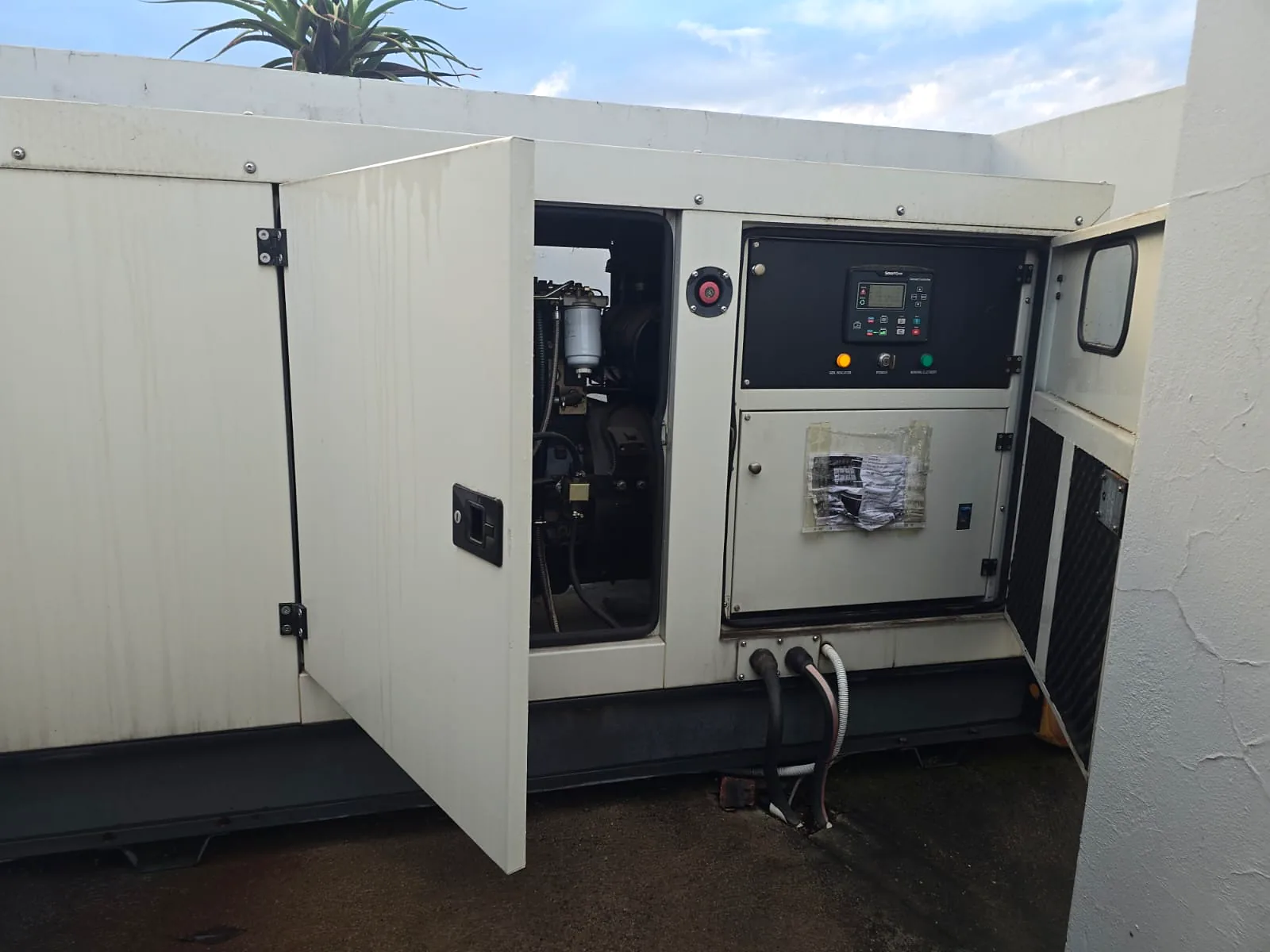
These checks need no tools and no covers removed. On a standby set, note any alarm on the screen first, then switch the controller to off before you open the canopy, so the set cannot start while you are close to it. Put it back in auto when you have finished.
- The alarm text on the controller screen, and whether the controller had been left in manual or off instead of auto
- There is fuel in the tank and any fuel valve is open
- The emergency stop button is released (usually twist or pull), unless it was pressed on purpose for work on the set
- The battery terminals look clean and tight: look only, do not touch them
- On standby sets, the battery charger shows that it is powered and charging
- The oil level on the dipstick, with the engine stopped and cool: many sets will not start, or stop at once, when it is low
- On petrol units: fuel tap on, choke set for a cold start, engine switch on
If the checks are fine and it still will not start, stop cranking. Call us with the make and model, the alarm text and what you heard when you pressed start. A standby set that fails you in the middle of an outage is an emergency repair.
Diagnosis
How we find the fault
- 01
Read the controller
The event log often shows a failed start, low battery voltage or an alarm before the fault.
- 02
Test the battery under cranking
A battery can show good voltage at rest and still collapse when the starter draws current.
- 03
Follow the start signal
From the controller through the start relay and solenoid to the starter, and the supply to the fuel solenoid and glow plugs.
- 04
Check fuel delivery
Fuel at the filters, lift pump and injection pump, air in the system, and the condition of the fuel itself.
- 05
Prove the whole sequence
On standby sets the repair is confirmed with an automatic start on a simulated mains failure, not just a start in manual.
Typical repairs
| Cause found | Usual repair |
|---|---|
| Flat or worn-out battery | Usual repairRecharge or replace the battery, then find out why it went flat |
| Battery charger failed | Usual repairRepair or replace the charger so the battery stays charged between runs |
| Corroded or loose terminals | Usual repairClean, tighten and protect the connections |
| Air in the fuel system | Usual repairBleed the system and fix the leak or run-dry that let air in |
| Blocked filters or contaminated fuel | Usual repairReplace filters, drain water, and treat or replace the fuel |
| Fuel shut-off solenoid | Usual repairRestore its supply or replace the solenoid |
| Glow plugs, relay or intake heater | Usual repairTest each plug and the relay, and replace what has failed |
| Starter motor or solenoid | Usual repairRepair or replace the starter |
| Auto-start not triggering | Usual repairRepair the mains sensing or start wiring and return the controller to auto |
| Controller or sensing fault | Usual repairRepair wiring or sensors, correct settings, or replace the controller |
How it differs by generator type
Diesel standby sets depend on a whole automatic chain: battery, charger, mains sensing and a controller left in auto. A break anywhere in it shows only in a real outage. See standby generators for how the chain works.
Portable petrol generators usually fail after storage: stale petrol varnishes the carburettor, or the low-oil switch stops the engine. Gas generators add the gas supply and its valves to the list, and work on the gas supply itself needs a registered gas practitioner.
FAQ
Frequently asked questions
Why did my generator start during the test but not during the power cut?
A test usually starts the generator in manual. In an outage it must start automatically, which depends on a charged battery, a working charger, the controller being left in auto, and the controller detecting that the mains has failed. A fault in any of these only shows in a real outage.
Why does my generator start, run for a few seconds and then stop?
Look at the controller screen. A low oil pressure alarm points to the oil level or the pressure sensing: see low oil pressure shutdown. Without an oil alarm, the usual causes are fuel starvation, such as air in the lines or a blocked filter, or a fuel solenoid that opens while cranking but does not stay open. A loss-of-speed-signal alarm points to the speed sensing: the magnetic pickup, its wiring or the controller settings.
How long should I crank a generator that will not start?
About ten seconds at a time, with a rest of at least as long between attempts. If it has not started after a few attempts, stop and find the cause; more cranking only drains the battery and heats the starter.
My diesel generator ran out of fuel. Why will it not start after refilling?
Running dry draws air into the fuel lines and injection pump. Most diesels need the fuel system bled before they will start again, and on some engines the filters need priming as well.
My petrol generator will not start after months in storage. What is wrong?
Most likely stale petrol has left varnish in the carburettor. Draining the old fuel and cleaning or replacing the carburettor usually fixes it. Check the oil level too, as many units will not start when it is low.
Can I jump-start my generator?
It is best not to. A vehicle with its engine running can put voltage spikes into the controller and charger electronics, and many larger sets use a 24 V starting system that a 12 V vehicle cannot turn. On a small portable set that also has a recoil starter, use the pull cord instead. Either way, find out why the battery went flat: on standby sets the cause is often a failed charger.
Related pages
Related generator problems
Related brands
Who we work for
Need a generator technician?
- 24/7 operations
- We Arrive Within 1–2 Hours (usually within 1 hour)
- Free callouts and quotations